
Photo: Houghton Mifflin Harcourt / Wikimedia Commons (Public domain)
Sao Khruea Fa: A True Northern Story or Madame Butterfly?
Sao Khruea Fa ("the maiden Khruea Fa") is the heroine of a Thai sung play that generations have known: a young woman of Chiang Mai who loves a young officer from Bangkok and is abandoned. The story has been retold as stage drama, film and song so often that many people think it really happened to a northern woman (mae ying, แม่ยิงฯ). Its source lies much further away: in the Japanese port of Nagasaki, by way of a French novel, an American short story and an Italian opera.
This article does not rule for the reader. It takes the story apart and shows which pieces are documented, which come from the play, which were added later, and which sources still tell differently. We also look at the image of northern women this story created, to see where it came from, not to repeat it.
The cover photo shows the Ping River at Chiang Mai in a book printed in 1927, close to the years when this play was a hit in Bangkok. It is the real city the play chose as its setting, but it was never the home of a real Khruea Fa: she exists only in the play.
What the play tells: four sets, Love, Wedding, Farewell, Return
The most important primary source is the play itself. The sung play Sao Khruea Fa, in the edition printed for a cremation in 1971, is online in the Vajirayana Digital Library. We read it all; this is what it says.
| Set | What happens in the script |
|---|---|
| 1 Love | Khruea Fa is an orphan living in a garden house in Chiang Mai with the old couple who raised her and a servant named Kham Choet. She grows flowers and sends garlands to the town market with the old woman. Lieutenant Phrom, a soldier from the capital, comes with his friend Phra Ram Phalaphai, an adviser to the royal commissioner, and asks for her hand. |
| 2 Wedding | The betrothal procession arrives; there are offerings to the spirits and the tying of blessing threads. A monk storms in to stop it; Phrom drives him off and the wedding goes on. |
| 3 Farewell | Their son is born. Phrom is ordered back to the capital on official business; he ties the wrists of child and wife and promises to return. |
| 4 Return | Khruea Fa waits and turns away a Chiang Mai noble who courts her. When Phrom really comes back, he has been promoted and brings a new wife, Champa. Khruea Fa ends her life with her father's knife. |
Anyone who knows Madame Butterfly will see that the two follow each other almost beat for beat. The author did not hide it. Under the title he wrote: "after the famous French opéra-comique Madame Butterfly, taken from the book Klai Ban (written by Prasoet Aksorn)". Mukrin Wirojchuchat's 1996 thesis, which compares the two closely, concludes that the theme, plot, characters and settings of Sao Khruea Fa are very close to the opera, only made Siamese throughout.
How does the printed play end? Chutipong Patase (2018) quotes the closing verses: Khruea Fa cuts her throat, which matches the text we read. Some articles tell this scene differently; we return to it under common mistakes.
The story's path from Nagasaki to Chiang Mai
The story came through several hands, and each added something.
- 1887 Pierre Loti publishes the French novel Madame Chrysanthème, about a naval officer and his temporary wife in Nagasaki.
- 1898 The American writer John Luther Long prints the short story Madame Butterfly in The Century. He said it came from what his sister told him about Nagasaki, but Playbill and Mukrin's thesis point out that much of the detail comes from Loti's novel.
- 1900 David Belasco turns it into a one-act stage play, first in New York, then London. Puccini saw it in London, though he knew no English, and asked for the opera rights (Britannica).
- 1904 The opera Madama Butterfly premieres at La Scala, Milan, on 17 February and is booed; the revised version in Brescia on 28 May succeeds (Britannica).
- 1906 The French version opens at the Opéra-Comique in Paris on 28 December, in Paul Ferrier's translation (Brodbeck, Girardi and Casadei).
- 1907 King Chulalongkorn sees the opera in Paris on his second European tour, then tells the story to Prince Narathip Praphanphong (the 1971 foreword and Post Today).
- c. 1907–1909 Prince Narathip writes it as a sung play under the pen name Prasoet Aksorn.
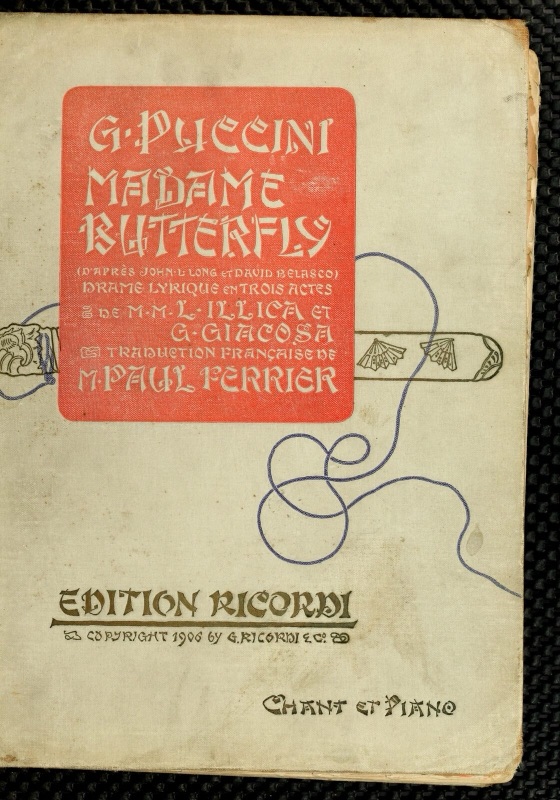
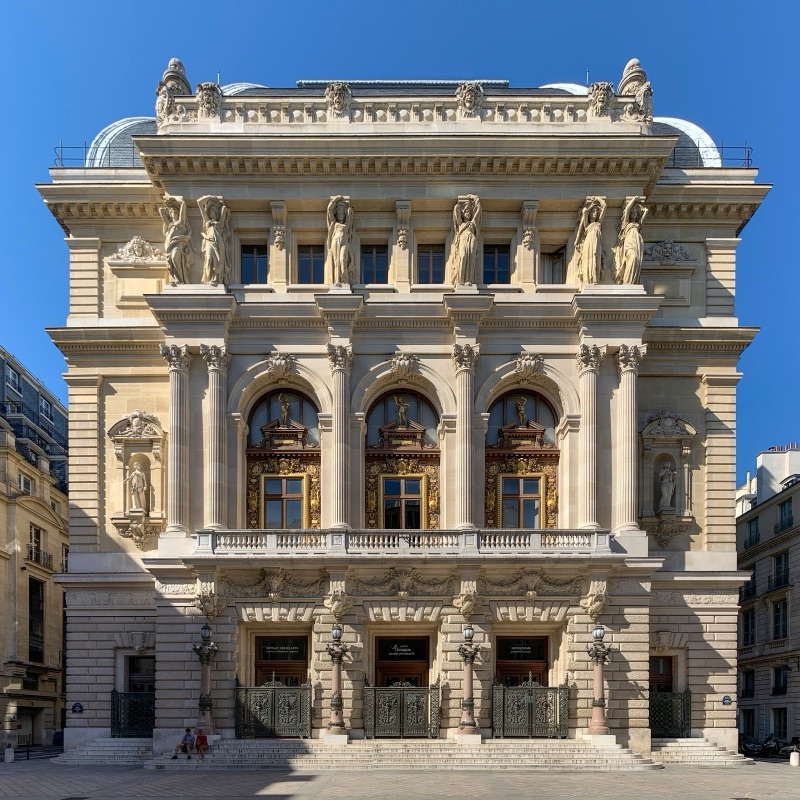
The word "opéra-comique" in the heading matches the name of the Opéra-Comique theatre, where the French version was playing in Paris at the time. That is our own observation; the sources do not say which theatre the King attended. What is clear is that the story reached Siam as a retelling, through the King's letters and his own telling, not as a translation, so the prince was free to write it anew.
Follow the path yourself in the widget below. Tap each step to see what changed; the steps before it light up back to the start. The second tab asks you to match the characters of the two stories, and the third opens the play set by set.
Prince Narathip and the Preedalai Theatre: when was it first staged?
Prince Narathip Praphanphong (born Prince Worawannakon, 1861–1931) pioneered the Thai sung play. He built the Preedalai Theatre in his own palace, in the area people call Phraeng Nara (Post Today; Pimpika Mahamart 2015). Pimpika's research says Sao Khruea Fa was the troupe's most popular piece and ran until the prince's death in 1931.
Another open question is the part played by Princess Consort Dara Rasmi. Silpa Wattanatham, following Chanan's book, says she helped make the costumes, hair, music and dance true to life; Pimpika's research instead credits Chao Chom Manda Khian, the prince's mother, with the dance, and Mom Tuansri Worawan with the songs and music. We found no second source for the princess's role.
What two sources do agree on runs the other way. Chulalongkorn University's arts office (2022) and Krit Buranawitayawut (2018) say the princess took the idea of this play for her own song-drama Noi Chaiya, a story of Khon Mueang (khon mueang, ฅ฿นฯล้านฯนาฯ), the northern Thai people, sung in Kham Mueang (kam mueang, คำฯเมิอฯง) to sung-poetry tunes such as Long Nan (long nan, ล่อฯงนาฯ): almost an answer from the North.
Who is who: characters who moved house
Put the two stories side by side and almost every character has a counterpart.
| Madame Butterfly (opera) | Sao Khruea Fa (sung play) |
|---|---|
| Cio-Cio-San, a girl from a fallen family | Khruea Fa, an orphan of Chiang Mai who grows flowers |
| Pinkerton, a US naval officer | Lieutenant Phrom, a soldier from the capital |
| Suzuki, the maid | Kham Choet, servant and nanny |
| Sharpless, the consul who warns him | Phra Ram Phalaphai, a friend who advises the commissioner |
| The Bonze, the uncle who curses the wedding | A monk who storms in to stop the wedding |
| Prince Yamadori, a suitor | Chao Sai Nam Phueng, a Chiang Mai noble who courts her |
| Kate, the American wife | Champa, the wife he married in the capital |
| Her father's dagger, "die with honour" | Her father's knife, inscribed "lose your life, not your name" |
| Nagasaki and America | Chiang Mai and the Siamese capital |
(The opera side follows Britannica's synopsis; the play side follows the script.)
The monk who interrupts the wedding is especially telling. The play calls him "tu" and "khruba". In Kham Mueang tu (tu, ทุ) means a monk, and khruba (khruba, ระฯคูบาฯ), the dictionary explains, is an honorific for senior, respected monks, used only in Lanna culture. The play borrows northern words for a scene that came straight from Japan.
The hero, too, changes from "a foreigner" to "a man from the capital". In Kham Mueang a soldier is ta han (ta han, ตหานฯ), and the post Phra Ram advises is the kha luang (kha luang, ข้าหลฯวฯง), which the dictionary glosses as a provincial governor. The background matches the years when Siam sent officials north to govern, told in Lanna: Where the Name Comes From.
How northern is it? Tunes, customs and speech in the script
Its northern colour is what made audiences believe. The play adds it in layers.
Tunes. The script names a tune for every song. Counting from the 1971 printing, set 2 has about 9 tunes named "Lao" or "Long Nan" against 5 others, but across the play there are also many tunes named "Khmer", "Khaek" (Indian), "Farang" (Western) and classical Thai pieces. The dictionary explains that "Lao" at the start of a tune name marks many classical Thai songs, and that in the reign of King Chulalongkorn central Thais often called the people of Lanna "Lao" too. Pimpika notes that the play uses classical tunes in central and northern styles. The North you hear in this play is the North as Bangkok musicians heard it.
Customs. Set 2 has the khan mak (khan mak, ขันฯหมฯากฯ), the betrothal offerings, an offering to the spirits and the tying of blessing threads. In set 3 the hero ties the wrists of his child and wife before he leaves, close to the northern rite hong khwan (hong khwan, ร้อฯงขัวฯร), calling the spirit back to the body.
Speech. Pimpika notes that the play mixes central Thai, northern Thai, Lao and English. In the script Khruea Fa calls herself "khoi". The dictionary gives khoi (khoi, ข้อฯยฯ) as the first-person word of the Tai Lue, Tai Khuen and Yong, while Khon Mueang lovers tend to say poen (poen, เพิ่นฯ) and tua (tua, ต฿วฯ). And for "to speak", Kham Mueang says u (u, อู้), not "wao" as in the script.
One more observation, told with care. In set 4 the script has Khruea Fa blame herself with a word that central Siamese of that time used to belittle northerners. We do not repeat it, but it shows clearly whose eyes the play sees the North through.
What northern custom actually says about courtship and marriage
In the play the wedding is quick, and the woman is left alone when her husband goes. The northern customs recorded in the dictionary tell a different story. A young man who goes courting (aeo sao, แอ่วฯสาวฯ) visits the young woman at her home, and overstepping with her is phit phi (phit phi, ผิดฯผี), a wrong against the ancestral spirits who guard her family's house.
A man who did this had to pay sia phi (sia phi, เสยฯผี) or sai phi (sai phi, ไส่ผี): money and offerings to the woman's family. The spirits in question are the phi pu ya (phi pu ya, ผีปู่ย่า), the ancestral spirits, which the dictionary says pass down through the women of the family. Pensupa Sukkata (2011) uses this custom to show that in traditional Lanna society women kept the family spirits and men moved into the wife's home. That is a long way from the helpless heroine of the play.
From stage to screen and song
After the era of sung plays, the story reached the whole country through film.
- 1953 The film Sao Khruea Fa, made by Tae Prakardvudhisarn, later a National Artist, was a great success (THE STANDARD 2018; Pensupa 2011). Silpa Wattanatham lists follow-ups such as Luk Khruea Fa (1955) and Pisat Khruea Fa (1960).
- 1965 A remake shown at the Sala Chalermkrung, as the poster Chutipong (2018) reproduces shows.
- 1979 The College of Dramatic Arts brought the sung play back to the National Theatre, taught by Chaluey Sukhawanich and Lamun Yamakupta, and it has been passed on since (Pimpika 2015).
- c. 1990 Jaran Manopetch's song Long Mae Ping tells the women of Chiang Mai to value their own dignity and holds up the story of Sao Khruea Fa as a warning. Aumporn Thipdet and Siriwan Nantajantoon (2023) read Jaran's songs as pushing back against the image of the "easy northern girl".
Other film and TV versions are listed on general reference sites, but we could not find a second source to confirm them, so they are not included here.
Why people believe it is a true northern story
The sources give several reasons. We list them as each writer puts them.
- The setting is a real city. The play chose Chiang Mai and added northern tunes, customs and speech. Post Today notes that the play made Lieutenant Phrom and Sao Khruea Fa seem "as if they really existed".
- It has been retold for almost a hundred years. From a palace stage to film, drama and song. Chanan Yodhong (2025, as summarised in Silpa Wattanatham) writes that when a representation is repeated often, people inside and outside the culture may come to believe it is a long-standing trait.
- It became a template. Pensupa sees this "northern girl loves a man from the capital" plot as the model for many later northern-set films and songs, such as the Wang Bua Ban legend.
On the image itself, several writers agree. Pensupa titled her column "Northern women are not Sao Khruea Fa"; Chanan sees the North being looked at through Bangkok's power; Chutipong notes that the heroines of both Madame Butterfly and Sao Khruea Fa are written as people things happen to. The image says nothing about real northern women, but a great deal about the people who told the story.
Nagasaki has a "Madame Butterfly House" too
Stories believed to be real are not only a Chiang Mai thing. In Nagasaki, Glover House is called the "Madame Butterfly House". Japan's tourism agency explains that after the Second World War a US Army officer and his wife living there gave it that nickname. The house has no real link to the opera, but the name stuck; the city used it in promotion after opening the house to visitors, and in 1963 put up a statue of the singer Miura Tamaki, who sang Butterfly more than 2,000 times (Japan Experience tells the same story).
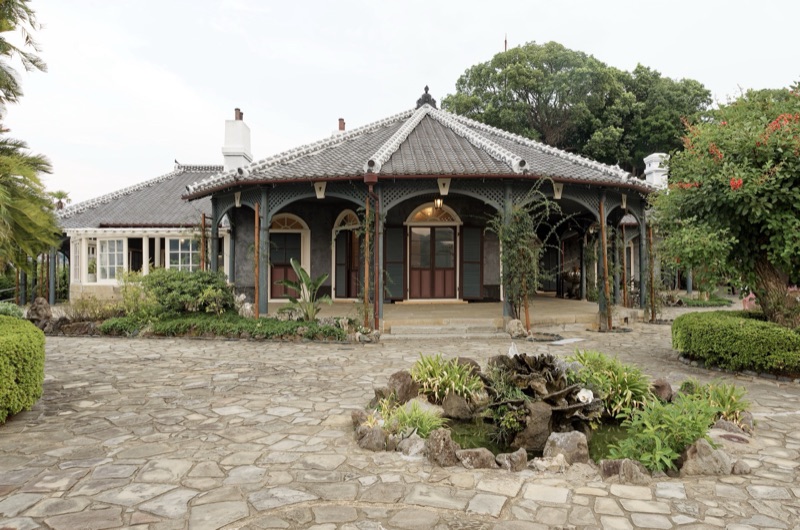
Even whether Madame Butterfly had a real model is still argued. Playbill says what Long's sister told him was only a few simple facts, and Mukrin's thesis says Long mixed Loti's novel, the Glover family story and his own invention. A story can move house many times, and every time it moves, someone finds it a real house to live in. Lanna has a case of its own: the towns of a poem that later readers try to pin to real places, in Lilit Phra Lo.
Piece by piece: what is documented, what was added later
Try sorting the story yourself. The widget below splits it into 13 pieces; tap the box you think fits, then see the reason and the sources. The second tab shows how the story grew; press "Compare" on two versions to set them side by side. The third is a map of what is real and what exists only in the story.
Common mistakes: what the sources show
"Sao Khruea Fa is the true story of a woman of Chiang Mai"
No record of any real woman has been found. The author says himself that he followed Madame Butterfly, and Mukrin's thesis finds every main element matches the opera.
"Khruea Fa was a dancer"
In the printed play Khruea Fa is an orphan who keeps a flower garden; she is not called a dancer. "Dancer" appears in later writing, such as Pensupa (2011) and Chutipong (2018), perhaps because the actress has to dance (fon, ฟ้อฯร) on the real stage; Pimpika records both solo and duet dances for the heroine.
"Lieutenant Phrom went to fight in the World War and lost his memory"
Some film synopses online say so, but we could not find two reliable sources to confirm it. What is certain is that the printed play has no war: Phrom is recalled to the capital on official business and comes back with a new wife.
"Khruea Fa stabbed herself in the stomach, like harakiri"
Pensupa wrote it that way, and some websites say she stabbed herself. The printed play describes her cutting her throat with her father's knife, as Chutipong quotes, matching the opera, where the father's dagger is used as well.
"Northern women are like Khruea Fa"
This is an image built by plays, films and songs over many decades. Pensupa, Chanan and the study of Jaran's songs all show it does not match real northern women, and the northern customs recorded in the dictionary even make women the keepers of the family spirits.
In Kham Mueang a story handed down over time is a tamnan (tamnan, ตํานาฯ). What makes Sao Khruea Fa interesting is that it became something like a northern legend, although it was born in a Bangkok palace from a Japanese story told by Westerners.
Summary
- Sao Khruea Fa is a sung play by Prince Narathip Praphanphong (Prasoet Aksorn), written around 1907–1909; the author says himself that it follows Madame Butterfly.
- The story reached Siam because King Chulalongkorn saw the opera in Paris in 1907 and told it to the prince; its roots go back to Puccini, Belasco, Long and Loti.
- The play moved the setting to Chiang Mai and added northern tunes, customs and speech, which is why people believe it really happened, but no record of a real woman has been found.
- Sources still differ on the first performance and on Princess Dara Rasmi's part.
- The image of the "naive, easily fooled" northern girl comes from retelling; several researchers and Jaran's songs push back against it.
Look up more words from this story: แม่ยิง ผิ๋ดผี and ผีปู่ย่า, then read the northern story this play inspired: Noi Chaiya.
Lanna stories people still half-believe, taken apart into what is on record, what one teller or text first said, and what was added later.
1. Ma Mia: What's Real, What's Legend, What's Fiction · the Royal Gazette, the 1964 book Phet Lanna and Charan's song: what is on record and what was added later
2. Wang Bua Ban: What's Real, What's Told, What's Tale · the teacher's legend above Huai Kaeo Falls: six tellers, a song, a film and the family's own account
▸ 3. Sao Khruea Fa: A True Northern Story or Madame Butterfly? (you are here) · Prince Narathip's sung play adapted from Madame Butterfly, and why people took it for a true northern story
4. Wiang Nong Lom: Did a City Really Sink? · the chronicle's town that sank in one night, set against the Mae Chan fault, archaeology and measured quakes
5. Wiang Kum Kam: Did a City Really Drown? · King Mangrai's town under the Ping river sand: the Fine Arts digs and the open question of when the sand came
6. Lilit Phra Lo: Real, Legend or Fiction? · Sarong, Wiang Lo and the Kalong river: what the poem says, and how later readers placed its towns on a real map
📚 All of Lanna's story: Lanna: Where the Name Comes From · The song-drama this play inspired: Noi Chaiya · A song that names it as a warning: Long Mae Ping
Sources
- Moradok Lanna dictionary: แม่ยิง · ผิ๋ดผี · เสียผี · ใส่ผี · ผีปู่ย่า · ตุ๊ · ครูบา · ข้อย · ขันหมาก · ฮ้องขวัญ · ข้าหลวง
- ประเสริฐอักษร (Prince Narathip Praphanphong). บทละครร้อง สาวเครือฟ้า [The sung play Sao Khruea Fa], sets 1–4 and foreword (1971 printing). Vajirayana Digital Library (in Thai)
- พิมพิกา มหามาตย์ และสวภา เวชสุรักษ์ (Pimpika Mahamart and Savapa Wechsurak). (2015). ละครร้องเรื่องสาวเครือฟ้า ของพระเจ้าบรมวงศ์เธอ กรมพระนราธิปประพันธ์พงศ์ [Sao Krua Fah, a musical performance by Prince Naradhip Prapanpongse]. Journal of Fine and Applied Arts, Chulalongkorn University 2(2)
- มุกริน วิโรจน์ชูฉัตร (Mukrin Wirojchuchat). (1996). มาดามบัตเตอร์ฟลาย: ศึกษาเปรียบเทียบฉบับต่าง ๆ และอิทธิพลที่มีต่อวรรณกรรมไทย [Madame Butterfly: a comparative study of various versions and their influences on Thai literary works]. MA thesis, Chulalongkorn University
- สุทธาสินี จิตรกรรมไทย เจียจันทร์พงษ์ (Sutthasinee Jiajanpong). (2026). "สาวเครือฟ้า" บทประพันธ์ปลายยุค ร.5 ที่สร้างภาพจำบิดเบือนของสาวชาวเหนือ [Sao Khruea Fa and the distorted image of northern women]. Silpa Wattanatham (retelling Chanan Yodhong, Prawattisat thi phet sang, Matichon 2025)
- ชุติพงศ์ ปะทาเส (Chutipong Patase). (2018). สาวเครือฟ้าและมิสไซ่ง่อน ผลผลิตจากละครเวทีแม่แบบ…มาดามบัตเตอร์ฟลาย [Sao Khruea Fa and Miss Saigon, children of Madame Butterfly]. Silpa Wattanatham
- เพ็ญสุภา สุขคตะ (Pensupa Sukkata). (2011). ปริศนาโบราณคดี: สาวเหนือไม่ใช่สาวเครือฟ้า [Northern women are not Sao Khruea Fa]. Matichon Weekly no. 1631
- โพสต์ทูเดย์ (Post Today). พระเจ้าบรมวงศ์เธอ กรมพระนราธิปประพันธ์พงศ์ [Prince Narathip Praphanphong]
- ธนกร วงษ์ปัญญา (Thanakorn Wongpanya). (2018). สิ้น 'แท้ ประกาศวุฒิสาร' ศิลปินแห่งชาติ ผู้สร้างภาพยนตร์สาวเครือฟ้า [National Artist Tae Prakardvudhisarn, maker of the film Sao Khruea Fa, dies]. THE STANDARD
- สำนักบริหารศิลปวัฒนธรรม จุฬาลงกรณ์มหาวิทยาลัย (Office of Arts and Culture, Chulalongkorn University). (2022). พระนิพนธ์ในพระราชชายาเจ้าดารารัศมี: น้อยไจยา [Noi Chaiya, a work of Princess Dara Rasmi]
- กฤษติ์ บูรณวิทยวุฒิ (Krit Buranawitayawut). (2018). น้อยใจยา/เสเลเมา [Noi Chaiya / Se Le Mao]. Veridian E-Journal, Silpakorn University 11(3)
- เอื้อมพร ทิพย์เดช และสิริวรรณ นันทจันทูล (Aumporn Thipdet and Siriwan Nantajantoon). (2023). ภาพแทนคนเมืองในบทเพลงของจรัล มโนเพ็ชร [Representations of Khon Mueang in Jaran Manopetch's songs]. Journal of Humanities and Social Sciences, Uttaradit Rajabhat University 10(1)
- Britannica. Madama Butterfly
- Playbill. Was There a Real Madame Butterfly?
- Brodbeck, Girardi and Casadei. Madama Butterfly: the staging manual of the 1906 Paris production. Ca' Foscari University of Venice
- Puccini, G. (1906). Madame Butterfly (d'après John L. Long et David Belasco). French translation by Paul Ferrier. Edition Ricordi
- Japan Tourism Agency. Tamaki Miura and Giacomo Puccini Statues (multilingual explanation database, Glover Garden, Nagasaki)
- Japan Experience. Glover Garden Nagasaki: a journey through Japan's early modernization
Practise the words from this article
Flip through 21 flashcards of the Lanna words used in this article.


