
Photo: Photo Dharma / Wikimedia Commons (CC BY 2.0)
Lanna and the World: Human History and Lanna's Place in It
Lanna (lanna, ล้านฯนาฯ) did not grow up in an empty world. In the year King Mangrai founded Chiang Mai, a Chinese envoy was arriving at Angkor. In the year King Bayinnaung's army took Chiang Mai, England gained a new queen. And in the year Chiang Saen was taken back, Napoleon crowned himself emperor. Lanna and the World sets the story of Lanna on the same timeline as the whole of human history, and asks where our land sits in it.
Kham Mueang (Northern Thai) has a plain word for the world people live in: mueang khon (mueang khon, เมิอฯงฅ฿นฯ), which the dictionary explains as "the human world, the place where people and animals live". Lands far away are mueang nok (mueang nok, เมิอฯงนอฯก), "foreign countries". This article is about the whole mueang khon, with Lanna as one thread in it.
We do not compare who was greater. We compare time: what came first, what came later, and what happened at the same moment. Kham Mueang has just the word for this, pang muea (pang muea, ปางฯเมิ่อฯอ), meaning "at the time when; while". So every era in this article has one pang muea… (at the same time) box that points to two things that happened in the same year or close to it.
- Years are given in CE for every event; events in Lanna and Siam also carry the Buddhist Era year in the Thai version (B.E. = CE + 543). Very old dates read "about … years ago" or "BCE".
- About means the sources give an approximate year, or disagree. Where they disagree, we name both.
- According to legend means the year or story comes from a tamnan (tam nan, ตํานาฯ), a chronicle written down later, with no other evidence yet to confirm it.
- 🎯 marks an event where an outside power reached for Lanna's land: the Mongols, the Ming, Đại Việt, Burma, Siam, Britain and France.
- Every card in the timeline shows its sources. World events have at least two; Lanna events come from Moradok Lanna's own articles and the sources of those articles.
The timeline below is the heart of the article. Each row is a land or a kingdom, and the Lanna row always stays on top. Drag the year line anywhere and the this year around the world card tells you what was happening in each place that year. Press 🎯 to see only the powers that reached for Lanna, or press a same time item to jump to an interesting year.
If you would like the big picture first, this table sums up all ten eras on one page.
| Era | Dates | What the world was doing | Here |
|---|---|---|---|
| 1 Prehistory | about 300,000 years ago – 601 BCE | humans leave Africa, farming begins, cuneiform, the pyramids | Spirit Cave (Mae Hong Son), Ban Chiang |
| 2 The ancient world | 600 BCE – 499 CE | the Buddha, Ashoka, Greece, Rome, the Han | Funan on the coast; Buddhism reaches Sri Lanka |
| 3 The first millennium | 500–1199 | the Tang, the Hijri era, Charlemagne | Dvaravati, Hariphunchai (by legend), Angkor, Bagan |
| 4 The Mongol storm | 1200–1349 | Genghis Khan, Magna Carta, the Yuan invade Japan | King Mangrai founds Chiang Rai (1262) and Chiang Mai (1296) |
| 5 Lanna's golden age | 1350–1549 | the Ming, Hangul, Gutenberg, Columbus | Sumana Thera, King Tilokarat, the 1477 council |
| 6 The age of exploration | 1550–1769 | the East India Company, the Tokugawa, the Taj Mahal | Lanna under Burmese rule; Chiang Mai independent 1727–1763 |
| 7 The age of revolutions | 1770–1849 | America 1776, France 1789, Napoleon | fuen man 1774, King Kawila's revival, Chiang Saen 1804 |
| 8 Colonial empires | 1850–1909 | Meiji, Britain takes Burma, France forms Indochina | teak, the Chiang Mai treaties, Monthon Phayap |
| 9 The twentieth century | 1910–1989 | two world wars, neighbours win independence, the Moon | railway to Chiang Mai 1921, Chiang Mai University, "Lanna" with the tone mark |
| 10 Today | 1990 – now | the World Wide Web, COVID-19 | Ban Chiang a World Heritage site, Chiang Mai a Creative City |
Era 1, prehistory: from Africa to Spirit Cave
Human history is longer than we tend to imagine. Fossils from Jebel Irhoud in Morocco, reported in 2017, are about 300,000 years old, the oldest Homo sapiens remains known so far. The great spread of people out of Africa came about 60,000 years ago, though smaller groups left earlier, some perhaps as early as about 120,000 years ago.
Around 10,000 BCE, about 12,000 years ago, people in the Fertile Crescent of the Middle East began to grow crops and keep animals; farming later arose on its own in several other regions, China among them. Around 3200 BCE the Sumerians of Mesopotamia began writing cuneiform on clay tablets, and around 2560 BCE the Great Pyramid of Khufu at Giza was finished.
In the land that is Lanna today, the traces of people are very old too. Spirit Cave (Tham Phi Maen) in Pang Mapha district, Mae Hong Son, shows hunter-gatherers living there on and off about 12,000–7,000 years ago by radiocarbon dating, and newer studies confirm that people used these uplands from the end of the last Ice Age.
Further away, in Thailand's northeast, the archaeological site of Ban Chiang in Udon Thani was a rice-growing community that made pottery and later cast bronze. The age of Ban Chiang's bronze is still debated: dating results put it at about 2000 or about 1000 BCE.
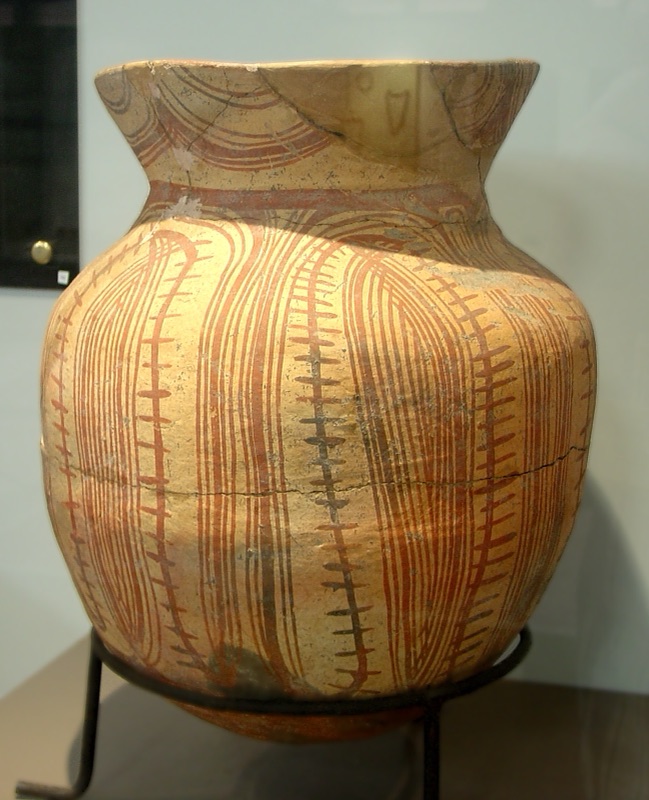
Photo: Michael Gunther / Wikimedia Commons (CC BY-SA 4.0)
These numbers are too big to picture, so shrink the 300,000 years of human history into one day. The great move out of Africa happens almost 5 hours before midnight, the start of farming about an hour before midnight, the first writing about 25 minutes before midnight, and the founding of Chiang Mai in 1296 only about three and a half minutes before midnight; counting Lanna from the founding of Chiang Rai (1262), about 3.7 minutes. Zoom in yourself on the true-to-scale ribbon below.
Read more: Phrae (Mueang Pae) (the first people of the Phrae basin) · Mae Hong Son
Era 2, the ancient world: the Buddha, Ashoka and the Silk Road
Between about 600 BCE and 500 CE great states rose in many corners of the world. Cyrus the Great founded the Persian Empire around 550 BCE. The Athenians built the Parthenon between 447 and 432 BCE. The state of Qin united China in 221 BCE, followed by the Han dynasty (206 BCE–220 CE), when the Silk Road linked China with Central Asia.
In 27 BCE Rome turned from a republic into an empire, until the Western Roman Empire ended in 476 CE; the eastern half (Byzantium) went on for almost another thousand years.
For the people of Lanna, the most important story of this era happened in India. The Buddha lived in northern India. His exact dates still differ: tradition gives about 563–483 BCE, while many scholars prefer about 480–400 BCE. Later, Ashoka of the Maurya dynasty (reigned about 268–232 BCE) supported Buddhism and sent out missions to spread it; the stupa at Sanchi was begun in his time. Around the 3rd century BCE Buddhism reached Sri Lanka, at Anuradhapura.
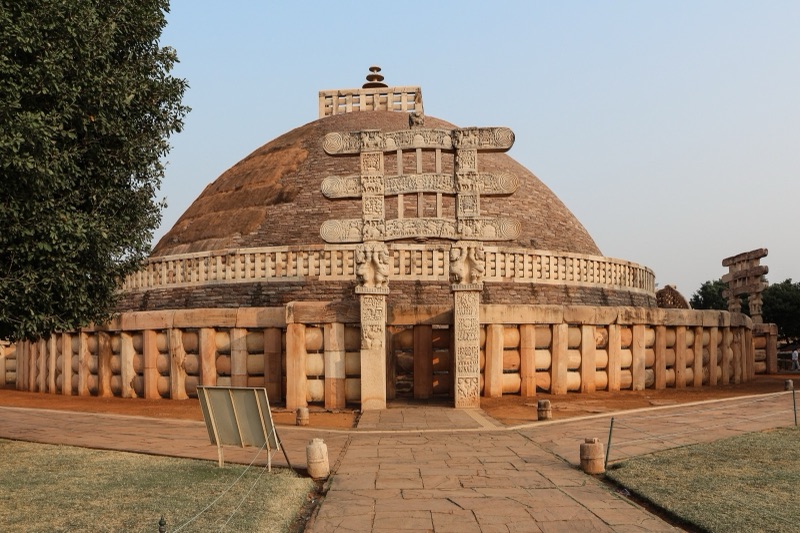
Photo: Bernard Gagnon / Wikimedia Commons (CC BY-SA 3.0)
Closer to home, Funan was a coastal trading state near the mouth of the Mekong, from about the 1st to the 6th century, which took religion and culture from India. In Central America, Maya cities such as Tikal flourished from about 250 to 900 CE, with pyramids, calendars and a writing system of their own. And in northern India the Gupta dynasty (about 320–550 CE) was a high point of art, literature and mathematics.
In our timeline the Lanna row is still empty in this era, because no event in this land can yet be dated clearly. But the religion that would become the heart of Lanna had already set out. The form of Buddhism Lanna took up in the 14th century is called Lankavamsa, the "Sri Lankan lineage", after Sri Lanka, the land that received Buddhism from India in this era.
Era 3, the first millennium: Hariphunchai, Angkor and Bagan
Between 500 and 1200 CE the world gained many new centres. The Byzantine emperor Justinian completed Hagia Sophia in 537. The Tang dynasty (618–907) made Chang'an one of the largest cities in the world. In 622 the Prophet Muhammad journeyed from Mecca to Medina, year one of the Hijri era. Silla united most of the Korean peninsula in 668, Japan set up its first permanent capital at Nara in 710, and on Christmas Day 800 Charlemagne was crowned emperor in Rome.
Our neighbours took shape in this era too. The Dvaravati culture of the Mon flourished on the central plain of Thailand from about the 6th to the 11th century. Around 802 Jayavarman II proclaimed himself universal ruler, the start of the Angkor empire; in the 12th century Suryavarman II built Angkor Wat.
In 1010 Đại Việt moved its capital to Thăng Long (today's Hanoi), and in 1044 King Anawrahta came to the throne of Bagan and supported Theravada Buddhism. In Sri Lanka, King Parakramabahu I (reigned 1153–1186) brought Polonnaruwa to its height and unified the Sri Lankan monastic order.
In the Ping valley stood Hariphunchai, that is La Pun (la pun, หลฯะพูร), today's Lamphun. According to legend, in the Chamadevivamsa and the Jinakalamali, Queen Chamadevi came from Lavo to rule Hariphunchai in about 661. Its people were Mon, whose ancestors Kham Mueang calls the Meng (meng, เมงฯ).
The queen's date comes from chronicles written down centuries later. Chalermwut Takhami (2021) points out that no archaeological evidence confirms it yet, so it is best read as a valuable story.
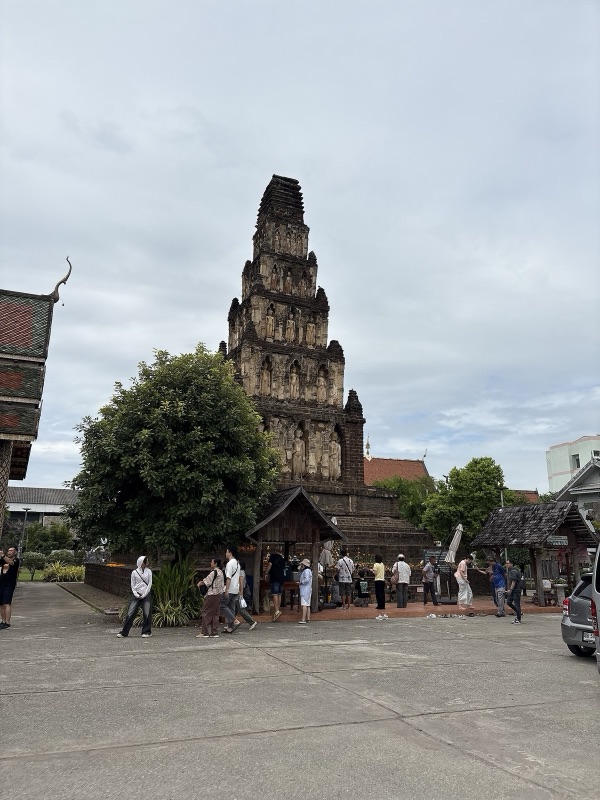
Photo: Chainwit. / Wikimedia Commons (CC BY 4.0)
Read more: Queen Chamadevi · Lamphun (La Pun)
Era 4, the Mongol storm and the birth of Lanna (1200–1349)
The 13th century belonged to the Mongols. In 1206 Temüjin was proclaimed Genghis Khan, leader of all the Mongols. In 1271 Kublai Khan founded the Yuan dynasty to rule China, and sent fleets to invade Japan in 1274 and 1281; both failed, partly because of storms the Japanese called kamikaze, "divine wind".
Far to the west, King John of England sealed Magna Carta in 1215, and around 1299 Osman I began to build the Ottoman state in Anatolia.
The storm came close to our land. In 1253 Kublai's Mongol army conquered the kingdom of Dali in Yunnan, so Mongol-Yuan power now bordered the Tai states and Burma. Around the same time, further south, Sukhothai was the capital of a Tai state in the Yom valley.
In this very era King Mangrai (manglai, มังฯรายฯ) built the kingdom of Lanna. The dictionary records that he founded Jiang Hai (jiang hai, ชยฯงรายฯ), Chiang Rai, in 1262, then came south and took Hariphunchai; the sources differ on the year, Prasert na Nagara giving 1281 and the Jinakalamali 1292.
He then built Wiang Kum Kam on the Ping River in 1286, following the work of Monnawat Phromrat (2025), and in 1296 founded Jiang Mai (jiang mai, ชยฯงไห่มฯ), Chiang Mai, as his capital, which the dictionary records as an independent state until 1558.
Lanna was not out of sight of the great powers. 🎯 The Yuan dynastic history calls this kingdom Babai Xifu (八百媳妇), first when it records a war in 1292, as Parit Chiwarak (2023) has gathered. So Lanna was born right under the pressure of the Mongol-Yuan.
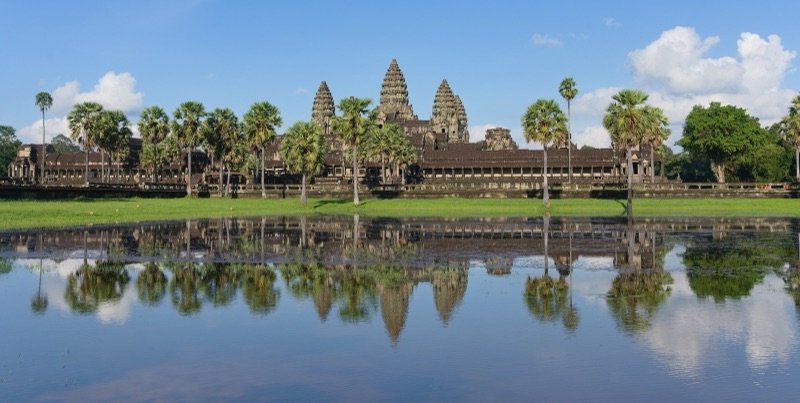
Photo: Satdeep Gill / Wikimedia Commons (CC BY-SA 4.0)
The era ended in disaster: the Black Death swept Europe between 1347 and 1351, killing about a third to a half of the population. Across the ocean, the Aztecs (Mexica) had already built Tenochtitlan on an island in a lake, around 1325.
Read more: King Mangrai · Chiang Rai (Jiang Hai) · Chiang Mai (Jiang Mai) · Lanna (the name in Chinese records)
Era 5, Lanna's golden age: an age of scripts and scriptures (1350–1549)
In the mid-14th century Lanna's neighbours took shape together. Ayutthaya was founded in 1351 and stayed the capital of Siam for more than 400 years. Fa Ngum united the Lao towns into the kingdom of Lan Xang in 1353. And 🎯 in 1368 Zhu Yuanzhang drove the Yuan out of China and founded the Ming dynasty, which ruled until 1644.
The Ming court called Lanna Babai Dadian (1391), and between 1405 and 1433 the admiral Zheng He led seven Ming fleet voyages to Southeast Asia, India, Arabia and East Africa.
In Lanna, religion and writing flourished. In 1369 King Kue Na invited Sumana Thera from Sukhothai to spread Sri Lankan-lineage Buddhism and built Wat Suan Dok. A year later the Wat Phra Yuen inscription (1370), the oldest Lanna-language inscription found so far, called King Kue Na "Chao Thao Song Saen Na", "lord of two hundred thousand rice fields".
Then King Tilokarat ruled Chiang Mai from about 1441 to 1487 (some works date his accession to 1442). He brought Phrae (1443) and Nan (1450) into Lanna, and in 1477 had the Tipitaka revised at Wat Maha Bodharam, Wat Chet Yot, in Chiang Mai (the photo at the top of this article).
🎯 In the same reign, in 1479, the Đại Việt army of Emperor Lê Thánh Tông invaded Lan Xang. Ming court records of 1480, translated by Geoff Wade, report that it took more than twenty stockades in Laos and meant to push on toward the "Ba-bai" region, that is Lanna. This campaign will be told in full in the Lanna and Đại Việt part of this series.
Lanna's written language is tua mueang (tua mueang, ต฿วฯเมิอฯง), the Lanna (Tai Tham) script, which monks and scholars inscribed on palm leaves (bai lan, ไบลานฯ). Between 1517 and 1528 Ratanapanya Thera composed the Jinakalamali, a Pali chronicle of Buddhism down to Lanna that historians still use today.
The rest of the world was changing fast. In 1453 Sultan Mehmed II took Constantinople, ending the Byzantine Empire. The Inca built Machu Picchu in the Andes around the middle of the 15th century. Leonardo da Vinci painted The Last Supper around 1495–1498. And Europe began to sail far: in 1492 Christopher Columbus landed on islands in the Caribbean, and in 1498 Vasco da Gama sailed around Africa to India.
The name Lanna itself appeared on European maps. Parit Chiwarak (2023) notes that Giovanni Leardo's world map (1448) shows Llana, and that Martin Behaim's globe, made in Nuremberg about 1492–1494, shows Lanna. In 1511 Portugal took the port of Melaka, the spice-trade hub of the Straits. Soon afterwards Spain took Tenochtitlan (1521), Babur founded the Mughal Empire in India (1526), and Pizarro began the Spanish conquest of the Inca (1532).
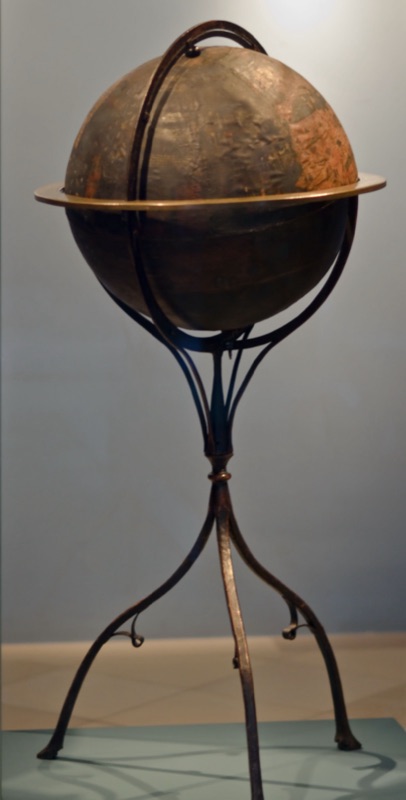
Photo: Martin Behaim / Georg Glockendon / Wikimedia Commons (CC BY-SA 3.0)
Read more: King Kue Na · King Tilokarat · The Jinakalamali · What is tua mueang? · Phrae (Mueang Pae) · Nan
Era 6, the age of exploration and Lanna under Burmese rule (1550–1769)
The 16th to 18th centuries were the age when European ships sailed the whole world. In 1600 England chartered the East India Company, and in 1602 the Dutch founded the VOC, which came to dominate the spice trade in Asia. In Japan the Tokugawa began to rule from Edo in 1603; in India the Mughal emperor Shah Jahan began the Taj Mahal around 1632; and in 1703 Peter the Great founded Saint Petersburg.
In Lanna, the name "Lanna" with its tone mark appears clearly on the Wat Chiang Sa inscription (1553; some sources give 1554), which records a king who ruled both lands, Lan Xang and Lanna. A few years later, 🎯 in 1558, the army of King Bayinnaung of the Toungoo dynasty took Chiang Mai, and Lanna became a vassal of Burma. King Mekuti stayed on the throne as a vassal ruler, and Queen Wisutthithewi ruled Chiang Mai from 1564 to 1578; after that there is no evidence that the Mangrai dynasty played any political role.
These two centuries were not one single picture. 🎯 Around 1600 King Naresuan sent Prince Ekathotsarot north to settle disputes in Lanna. 🎯 Under King Narai, Ayutthaya briefly held Chiang Mai (Wood gives March 1662; Laddawan says Ayutthaya held it only until 1663).
Around 1700–1701 the court of Ava raised the lord of Chiang Saen to the same rank as the lord of Chiang Mai, and from 1727 to 1763 Chiang Mai was independent of Burma. In Lampang, Nan Thip Chang drove the Burmese officials out of the town; the sources give 1732 or 1736.
🎯 In 1752 King Alaungpaya founded the Konbaung dynasty and reunited Burma, and in 1763 it retook Chiang Mai. Its rule was stricter, and it levied Lanna men for its wars, until in 1767 the Konbaung army took Ayutthaya. Kirigaya points out that this army included Tai Yai (Shan), Tai Yuan, Lao and men from Siam's own northern towns, not Burmese soldiers alone.
You can step through who held which city, period by period, in Lanna under Burmese rule, which tells this era in detail.
Read more: Lanna under Burmese rule · Lampang (Nan Thip Chang) · Lanna (the Wat Chiang Sa inscription)
Era 7, revolutions and the revival (1770–1849)
In the late 18th century the Western world changed at the roots. On 4 July 1776 thirteen American colonies declared their independence from Britain. In 1789 the people of Paris stormed the Bastille, and the French Revolution swept away the old order and declared the rights of man and of the citizen. In the east, Nguyễn Ánh became Emperor Gia Long and founded the Nguyễn dynasty in 1802.
In Lanna, in 1774, Chao Kawila of Lampang and Phraya Chaban of Chiang Mai rose against Burmese rule and went over to King Taksin of Thonburi. Kham Mueang has a word for that rising: fuen man (fuen man, ฟื้นฯม่านฯ), which the dictionary explains as "to rebel against the Burmese; to act to become independent of Burma". But the long wars left Chiang Mai almost empty from about 1776 to 1796, according to Phra Amarin and colleagues (2023).
🎯 In 1782 King Rama I founded Rattanakosin (Bangkok), and that same year Chao Kawila took his relatives down to pay homage. The revival that followed is the era Kham Mueang calls kep phak sai sa, kep kha sai mueang (kep phak sai sa kep kha sai mueang, เกัปฯผักฯไส่ซ้าเกัปฯข้าไส่เมิอฯง), "gathering vegetables into the basket, gathering people into the city".
King Kawila settled Chiang Mai firmly in 1796 (sources give different starting years, 1780, 1782 or 1796; the dictionary gives 1780), and was raised to King of Chiang Mai in 1802. The Yong people moved to Lamphun in large numbers in 1805, and Chiang Rai, deserted for decades, was founded again as a town in 1843.
Meanwhile Britain was moving into Asia. Between 1824 and 1826 Britain and Burma fought their first war, and Burma lost Assam, Arakan and Tenasserim. Between 1839 and 1842 Britain fought Qing China in the First Opium War, and China ceded Hong Kong to Britain. Lanna's neighbours to the west and north were beginning to feel the weight of a new empire.
Read more: King Kawila · Lamphun (La Pun) (the Yong) · Chiang Rai (Jiang Hai) (Chiang Saen and the refounding of Chiang Rai) · The Tai peoples
Era 8, teak, treaties and colonial empires (1850–1909)
The mid-19th century was an age of treaties with the Western powers. In 1855 Siam under King Rama IV signed the Bowring Treaty with Britain, opening free trade and giving extraterritorial rights to British subjects. In 1853 Commodore Perry of the United States brought warships into Edo Bay and forced Japan to open the following year, and from 1868 the Meiji Restoration drove Japan's rapid modernisation on Western lines.
Lanna entered this story through teak, mai sak (mai sak, ไม้สักฯ), which the dictionary describes as "a tree with a tall straight trunk … its wood hard and durable, good for building houses and making things". In the late 19th century British firms such as Bombay Burmah came to log teak in Phrae and across Lanna. The Indian rupee, ngoen thaep, came in with the teak trade and circulated in Lanna until the railway arrived.
In 1890 the first bridge across the Ping River at Chiang Mai, the Nawarat Bridge, was built of teak.
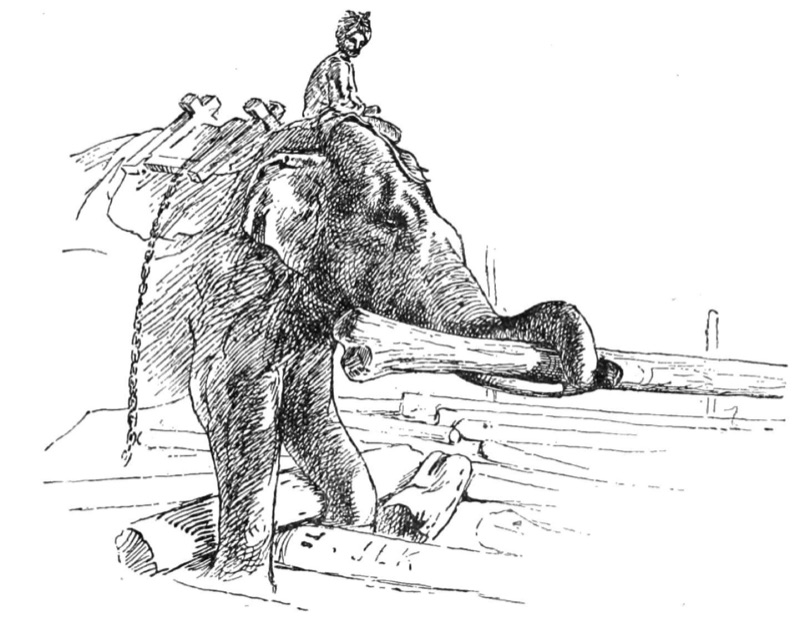
Image: unknown artist / Wikimedia Commons (Public domain)
🎯 Teak put Lanna at the centre of talks between two states. Siam and Britain signed the first Chiang Mai Treaty (1874 in the scholarly works on it; our Lanna article gives the Thai year 2416) to settle disputes over forest concessions between British subjects and Lanna's princes, and Siam then sent a commissioner to oversee Chiang Mai, Lamphun and Lampang.
That same year King Inthawichayanon made Mae Hong Son a town. The second Chiang Mai Treaty (1883) extended to Phrae and Nan, and Britain opened a vice-consulate in Chiang Mai.
Then both neighbours changed. 🎯 In 1885 the Third Anglo-Burmese War ended with the capture of Mandalay and the end of the Konbaung dynasty: Britain became Lanna's neighbour to the west. 🎯 In 1887 France joined Cochinchina, Annam, Tonkin and Cambodia into the Indochinese Union, and 🎯 in July 1893 French warships forced their way into the mouth of the Chao Phraya. The treaty of 3 October 1893 made Siam cede the left bank of the Mekong to France and forbade Siamese troops within 25 km of the right bank.
The map below lets you step era by era through the powers that reached for Lanna's land, from the Mongols in the 13th century to Britain and France in the treaty years 1893–1909. The map opens at 1885; step back to see the earlier eras. Arrows are schematic and show direction only; shaded areas appear only for the colonial era, where sources give an extent, and they are approximate. Every step shows its sources.
In 1899 the vassal status ended: Lanna's towns became the Northwestern Monthon, then "Monthon Phayap". A 2021 study in the Chiang Mai University Journal of Humanities argues that teak interests were a key reason. In Phrae, Chaiyapong Samniang (Sirindhorn Anthropology Centre) calls Chao Phiriya Thepphawong the last ruling prince of Phrae; his rule ended with the events of 1902.
After the 1893 crisis more treaties followed. 🎯 The 1904 treaty with France made Siam cede the land on the right bank of the Mekong opposite Luang Prabang, and the 1907 treaty ceded Battambang, Siem Reap and Sisophon in exchange for Trat and Dan Sai. 🎯 The 1909 treaty with Britain transferred Siam's rights over Kedah, Kelantan, Terengganu and Perlis, while Britain gave up extraterritorial rights for its subjects in Siam.
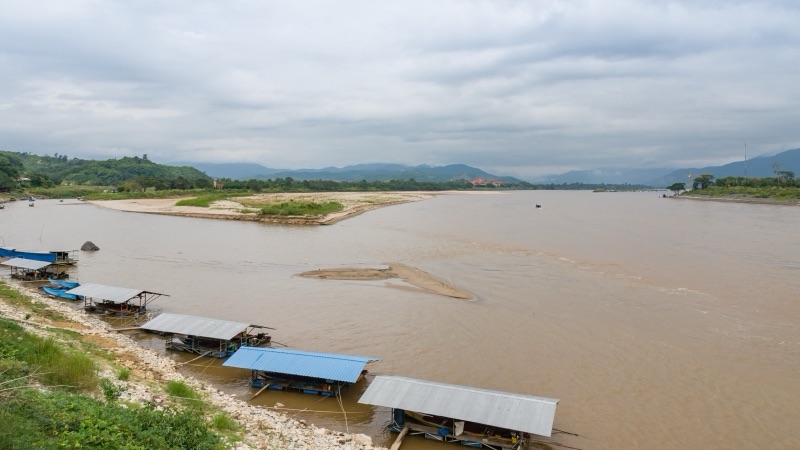
Photo: CEphoto, Uwe Aranas / Wikimedia Commons (CC BY-SA 3.0)
Read more: Ngoen thaep, Lanna's rupee · Phrae (Mueang Pae) (the teak era) · Chiang Mai (Jiang Mai) (the iron bridge) · Mae Hong Son · Lanna (from vassal state to Monthon Phayap)
Era 9, the twentieth century: railways, wars and a university (1910–1989)
The 20th century opened with a great war, the First World War (1914–1918), which the United States joined in 1917. After the Second World War the former colonies around us won independence: India and Pakistan in 1947, Burma in 1948. In 1949 the People's Republic of China was proclaimed, followed by the Korean War (1950–1953), which ended in an armistice. And on 20 July 1969 people walked on the Moon for the first time.
In Lanna, the thing that changed people's lives most was the railway. The Khun Tan tunnel between Lamphun and Lampang, 1,352 metres long, was completed in 1918, and in 1921 the northern line from Mueang Kok (mueang kok, เมิอฯงกอฯก), Bangkok, reached Chiang Mai station. The Nawarat Bridge was rebuilt in iron and opened in 1923; the Khon Mueang call it "Khua Lek", the iron bridge.
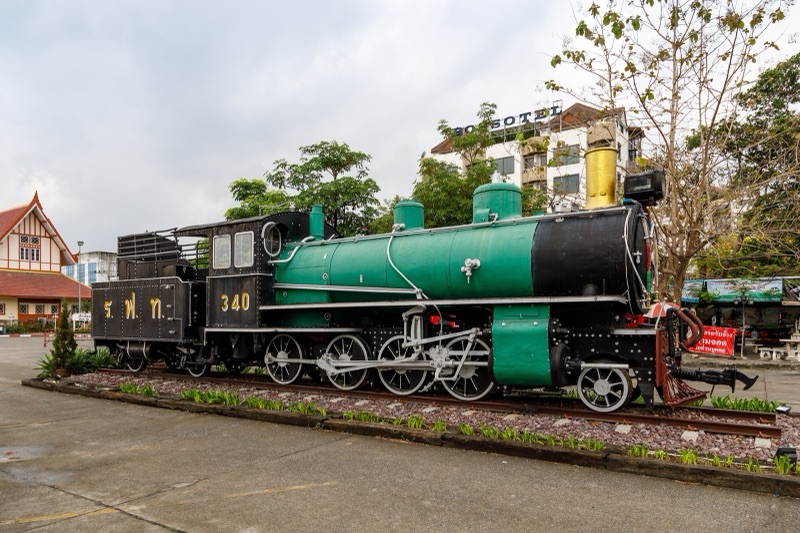
Photo: CEphoto, Uwe Aranas / Wikimedia Commons (CC BY-SA 4.0)
Government changed with the country. On 24 June 1932 the People's Party changed Siam's government to a constitutional system, and in 1933 the monthon system was abolished nationwide, so the provinces of Lanna came directly under the central government. A few years later Khruba Siwichai led the faithful in building the road up Doi Suthep, finished in 1935 entirely by villagers' labour.
The Second World War reached the North too. On 8 December 1941 the Japanese army entered Thailand, and during the war Japanese troops were stationed in Chiang Mai and across the North. Sattanan Panya-in's 2021 study in the HUSO journal looks at this time through the memories of the Khon Mueang themselves.
In the second half of the century Lanna began to study itself seriously. Chiang Mai University was founded in 1964, and scholars began to read original Lanna documents closely, until in 1987 the History Revision Committee of the Office of the Prime Minister ruled that the name should be written ล้านนา, with the tone mark.
In the meantime Phayao was split from Chiang Rai as a province in 1977, the newest of the Lanna provinces, and the wider world went through the end of the Vietnam War (1975) to the night the Berlin Wall was opened (9 November 1989).
Read more: Lanna (why Lanna, not "Lan Na") · Khruba Siwichai · Lamphun (La Pun) (the Khun Tan tunnel) · Phayao · Princess Dara Rasmi
Era 10, today: Lanna in a connected world (1990 to now)
In the early 1990s the world changed again. The Soviet Union broke up into fifteen countries in December 1991. Tim Berners-Lee at CERN created the World Wide Web (1989–1991) and opened it to everyone free of charge in 1993. And on 11 March 2020 the World Health Organization declared COVID-19 a pandemic.
Our region's heritage has been recognised worldwide. UNESCO listed Ban Chiang as World Heritage in 1992, named Chiang Mai a Creative City of Crafts and Folk Art in 2017, and listed Bagan as World Heritage in 2019.
The kingdom is gone today, but the dictionary still gives Lanna's present meaning as the eight upper northern provinces. People here call themselves Khon Mueang (khon mueang, ฅ฿นฯล้านฯนาฯ) and speak Kham Mueang (kam mueang, คำฯเมิอฯง), which the dictionary explains as what "Thai officialdom calls the Phayap regional language, or Northern Thai".
In a world where everything is connected, a language and a script that once lived only on palm leaves can travel further than ever, including onto the page you are reading now.
Read more: The eight Lanna provinces · Places of Lanna · What is tua mueang?
Common mix-ups: comparing time, not greatness
"Lanna was remote and cut off from the world"
The evidence says the opposite. The Yuan history records the name of Lanna from 1292, and the Ming court used it too (1391). The name was on maps and a globe in Europe by the 15th century. East India Company men came to trade in Chiang Mai around 1612. And the Lankavamsa Buddhism that Sumana Thera brought is named after Sri Lanka. Lanna was part of the region's networks of trade, religion and politics all along.
"A year in a legend is a year in history"
A year such as 661 for Queen Chamadevi comes from chronicles written centuries after the events. It is a valuable story, and it tells us how later people understood their past, but no archaeological evidence confirms it yet. In our timeline, events like this always carry the label according to legend.
"Same year means connected"
The pang muea boxes in this article do not claim that two events caused each other. Napoleon did not know Chiang Saen, and Gutenberg knew nothing of the council at Wat Chet Yot. Setting them side by side helps us picture how wide the world was in that year. Only some pairs really were linked, such as the Mongols and the Tai states of Yunnan, or Britain and Lanna's teak.
"This empire was greater because it came first or was bigger"
This article compares time; it does not rank which kingdom was greater. Every land has its own story, and the powers that reached for Lanna (🎯) are simply a historical fact about who extended their power where, not a judgement of who was good or bad.
Put the events in order, and test yourself
Now that you have read it all, try dragging the event cards into time order (on a phone, tap two cards to swap them), then press check. The game reveals the real years and shows the gaps between the events on a time bar. Play as many rounds as you like; each round draws new events.
Then test yourself with the questions below; every answer comes with its source.
The Lanna and the World series
This article is the main article of the Lanna and the World series. Each part will look in detail at Lanna's relations with one land.
- Lanna and the Mongols: the shock of 1253 and the founding of Chiang Mai
- Lanna and Đại Việt: the war of 1479–80
- Lanna and Sri Lanka: the road of Buddhism
- Lanna and Ming China
- Lanna and Britain: teak, treaties and Burma next door
- Lanna and France: 1893 and the Mekong
- Lanna and Japan: from trading ships to 1941
- Lanna and the Portuguese: mercenaries and guns
Summary
- Lanna and the World sets the story of Lanna on one timeline with human history. If 300,000 years were one day, Chiang Mai would be founded about three and a half minutes before midnight.
- Lanna was born in the Mongol storm (Dali 1253, Chiang Rai 1262, Chiang Mai 1296) and was recorded in Chinese documents and on European maps from the 13th to the 15th century.
- Lanna's golden age (the 1477 council) falls within one lifetime of Hangul and Gutenberg's press.
- The powers that reached for Lanna included the Mongols, the Ming, Burma, Siam, Britain and France; the colonial era around Lanna closed with the treaties with France and Britain of 1893–1909.
- Years from legend are always labelled, years where sources disagree name both sources, and comparing years is not ranking greatness.
Look up mueang khon and pang muea in the Moradok Lanna dictionary (in Thai), then read the full 700 years of Lanna in Lanna.
📚 More in this series: Lanna: where the name comes from, and 700 years of the land · Lanna under Burmese rule · Places of Lanna
Sources
- Moradok Lanna dictionary (in Thai): เมืองคน · ป๋างเมื่อ · ล้านนา · ฟื้นม่าน · ไม้สัก
- Moradok Lanna articles that are the source of the Lanna events (each lists its own sources): Lanna · Lanna under Burmese rule · King Mangrai · King Tilokarat · King Kawila · Queen Chamadevi · Lamphun (La Pun) · Chiang Mai (Jiang Mai) · Chiang Rai (Jiang Hai) · Lampang · Phrae (Mueang Pae) · Revered monks of Lanna
- Era 1 (Deep time to the first civilisations): Hublin et al. 2017, Nature · Max Planck Institute for Evolutionary Anthropology (press release 2017) · Max Planck Institute for the Science of Human History (2017) · University of Hawaiʻi News (2017) · Britannica: Stone Age: Neolithic · National Geographic Education: The Development of Agriculture · Asian Perspectives 31(1), University of Hawaiʻi ScholarSpace · Re-evaluating Pleistocene–Holocene occupation of cave sites in north-west Thailand (University of Washington, Antiquity 2021) · Britannica: Cuneiform · The Met: The Origins of Writing (Heilbrunn Timeline) · Britannica: Pyramids of Giza · UNESCO World Heritage: Memphis and its Necropolis · UNESCO World Heritage: Ban Chiang Archaeological Site · Penn Museum: Ban Chiang Project
- Era 2 (The ancient world): Britannica: Cyrus the Great · UNESCO World Heritage: Pasargadae · Britannica: Buddha · UNESCO World Heritage: Lumbini, the Birthplace of the Lord Buddha · Britannica: Parthenon · UNESCO World Heritage: Acropolis, Athens · Britannica: Ashoka · UNESCO World Heritage: Buddhist Monuments at Sanchi · Britannica: Anuradhapura · UNESCO World Heritage: Sacred City of Anuradhapura · Britannica: Shihuangdi · UNESCO World Heritage: Mausoleum of the First Qin Emperor · Britannica: Han dynasty · The Met: Han Dynasty (Heilbrunn Timeline) · Britannica: Augustus · World History Encyclopedia: Augustus · Britannica: Funan · The Met: Lost Kingdoms, Hindu-Buddhist Sculpture of Early Southeast Asia (2014) · Britannica: Maya · UNESCO World Heritage: Tikal National Park · Britannica: Gupta dynasty · World History Encyclopedia: Gupta Empire · Britannica: Romulus Augustulus · World History Encyclopedia: Fall of the Western Roman Empire
- Era 3 (The first millennium): Britannica: Hagia Sophia · UNESCO World Heritage: Historic Areas of Istanbul · Britannica: Dvaravati · Britannica: Tang dynasty · The Met: Tang Dynasty (Heilbrunn Timeline) · Britannica: Hijrah · The Met: The Birth of Islam (Heilbrunn Timeline) · เฉลิมวุฒิ ต๊ะคามี 2564, จามเทวี: ตัวตนและอุดมคติ (ThaiJO) · Britannica: Silla · UNESCO World Heritage: Gyeongju Historic Areas · Britannica: Nara period · UNESCO World Heritage: Historic Monuments of Ancient Nara · Britannica: Charlemagne · UNESCO World Heritage: Aachen Cathedral · Britannica: Angkor · UNESCO World Heritage: Angkor · Britannica: Vladimir I · UNESCO World Heritage: Kyiv: Saint-Sophia Cathedral · Britannica: Hanoi · UNESCO World Heritage: Central Sector of the Imperial Citadel of Thang Long – Hanoi · Britannica: Anawrahta · UNESCO World Heritage: Bagan · Britannica: Battle of Hastings · UNESCO World Heritage: Tower of London · Britannica: Polonnaruwa · UNESCO World Heritage: Ancient City of Polonnaruwa
- Era 4 (The Mongol storm and the birth of Lanna): Britannica: Genghis Khan · Columbia University, Asia for Educators: The Mongols in World History · Britannica: Magna Carta · The National Archives (UK): Magna Carta 1214–1225 · Britannica: Sukhothai kingdom · UNESCO World Heritage: Historic Town of Sukhothai and Associated Historic Towns · Britannica: Yunnan · Daniels 2018, The Mongol-Yuan in Yunnan and Proto-Tai/Tai Polities, Journal of the Siam Society (ThaiJO) · จรูญ แดนนาเลิศ และประยูร อิมิวัตร 2561 (ThaiJO) · Britannica: Yuan dynasty · The Met: The Yuan Dynasty (Heilbrunn Timeline) · Britannica: Kamikaze of 1274 and 1281 · Bowdoin College: Mongol Invasions of Japan, 1274 and 1281 · ประเสริฐ ณ นคร (ศิลปวัฒนธรรม) · มนวัธน์ พรหมรัตน์ 2568, วารสารมหาวิทยาลัยพายัพ (ThaiJO) · พริษฐ์ ชิวารักษ์ 2566, วารสารประวัติศาสตร์ธรรมศาสตร์ (ThaiJO) · Britannica: Marco Polo · Columbia University, Asia for Educators: Marco Polo · Yale University, eHRAF World Cultures: Zhou Daguan · Angkor Database: Zhou Daguan's Customs of Cambodia · Britannica: Osman I · UNESCO World Heritage: Bursa and Cumalıkızık: the Birth of the Ottoman Empire · Britannica: Tenochtitlan · UNESCO World Heritage: Historic Centre of Mexico City and Xochimilco · Britannica: Black Death · World History Encyclopedia: Black Death
- Era 5 (Lanna's golden age): Britannica: Ayutthaya · UNESCO World Heritage: Historic City of Ayutthaya · Britannica: Lan Xang · UNESCO World Heritage: Town of Luang Prabang · Britannica: Ming dynasty · The Met: Ming Dynasty (Heilbrunn Timeline) · Britannica: Zheng He · Columbia University, Asia for Educators: The Ming voyages · วรรณิดา ธีระทัศนานันต์ และ หลี่ ฉ้านซง 2568 (ThaiJO) · Britannica: Hangul · UNESCO Memory of the World: Hunmin Chongum Manuscript · Britannica: Machu Picchu · UNESCO World Heritage: Historic Sanctuary of Machu Picchu · Britannica: Fall of Constantinople · Britannica: Johannes Gutenberg · Library of Congress: The Gutenberg Bible · Britannica: Laos: history · Geoff Wade, Southeast Asia in the Ming Shi-lu (NUS): Cheng-hua 16/8/7, 1480 · Geoff Wade, Southeast Asia in the Ming Shi-lu (NUS): Cheng-hua 16/12/21, 1480 · University of Oxford, Cabinet: Martin Behaim's globe, 1492 · Britannica: Christopher Columbus · UNESCO World Heritage: Colonial City of Santo Domingo · Britannica: Last Supper · UNESCO World Heritage: Church and Dominican Convent of Santa Maria delle Grazie with "The Last Supper" · Britannica: Vasco da Gama · UNESCO World Heritage: Monastery of the Hieronymites and Tower of Belém in Lisbon · Britannica: Safavid dynasty · UNESCO World Heritage: Meidan Emam, Esfahan · Britannica: Melaka · UNESCO World Heritage: Melaka and George Town, Historic Cities of the Straits of Malacca · Britannica: Hernán Cortés · Britannica: Mughal dynasty · The Met: The Art of the Mughals before 1600 (Heilbrunn Timeline) · Britannica: Francisco Pizarro · UNESCO World Heritage: City of Cuzco
- Era 6 (The age of exploration and Burmese rule): ศูนย์มานุษยวิทยาสิรินธร: จารึกวัดเชียงสา · Britannica: Bayinnaung · ลัดดาวัลย์ แซ่เซียว 2537, วิทยานิพนธ์ มหาวิทยาลัยเชียงใหม่ · Britannica: Elizabeth I · The Royal Family: Elizabeth I · Britannica: East India Company · World History Encyclopedia: East India Company · W.A.R. Wood 1926, A History of Siam (Vajirayana) · Britannica: Dutch East India Company · UNESCO Memory of the World: Archives of the Dutch East India Company · Britannica: Tokugawa period · UNESCO World Heritage: Shrines and Temples of Nikko · Kirigaya 2015, Journal of the Siam Society 103 · Britannica: Taj Mahal · UNESCO World Heritage: Taj Mahal · ศูนย์มานุษยวิทยาสิรินธร: เมืองเชียงแสน · Britannica: Saint Petersburg · UNESCO World Heritage: Historic Centre of Saint Petersburg · ศิลปวัฒนธรรม: สภาพหลังพม่ายึดล้านนา (อ้าง สรัสวดี อ๋องสกุล) · ศูนย์มานุษยวิทยาสิรินธร: วัดพระธาตุลำปางหลวง · สำนักงานพาณิชย์จังหวัดลำปาง · Britannica: Alaungpaya
- Era 7 (Revolutions and the revival): สำราญ ผลดี 2562, วารสารศิลปศาสตร์ ม.มหิดล (ThaiJO) · พระอัมรินทร์ สนฺติธมฺโม และคณะ 2566, วารสารธรรมธารา · Britannica: Declaration of Independence · US National Archives: The Declaration of Independence · Britannica: Bangkok · Britannica: French Revolution · Conseil constitutionnel: Declaration of the Rights of Man and of the Citizen of 1789 · Britannica: Gia Long · UNESCO World Heritage: Complex of Hué Monuments · สำนักงานคลังจังหวัดเชียงราย (ข้อมูลจังหวัด) · Britannica: Napoleon I · World History Encyclopedia: Napoleon Bonaparte · เบญจวรรณ พลประเสริฐ 2561, วารสารมนุษยศาสตร์ มช. (ThaiJO) · Britannica: Anglo-Burmese Wars · National Army Museum: First Burma War · Britannica: Opium Wars · National Army Museum: First Opium War
- Era 8 (Colonial pressure): Britannica: Matthew C. Perry · US Office of the Historian: The United States and the Opening to Japan, 1853 · Britannica: Bowring Treaty · UK Parliament treaty records: Siam, 18 April 1855 · Britannica: Meiji Restoration · Columbia University, Asia for Educators: The Meiji Restoration · Teak: Imperialism and the Role of Britain in Siamese–Lanna Relations before 1899, วารสารมนุษยศาสตร์ มช. 2564 · Journal of the Siam Society: teak concessions and the Chiang Mai treaties · National Army Museum: Third Burma War · ไทยพีบีเอส 2563: เรือนไม้สักเมืองแพร่ · Britannica: Indochinese Union · US Office of the Historian: Vietnam · สุทธิศักดิ์ แสวงศักดิ์ 2562, วิทยานิพนธ์ มศว · US Office of the Historian: Foreign Relations of the United States 1893 · Journal of History (ThaiJO): the 1893 crisis · SOAS Research Online · ชัยพงษ์ สำเนียง, ศูนย์มานุษยวิทยาสิรินธร · International Court of Justice: Counter-Memorial of Thailand, Temple of Preah Vihear · Journal of Asian Studies: The Treaty of March 23, 1907 between France and Siam · SOAS: thesis record on the Anglo-Siamese Treaty of 1909 · European Proceedings: Anglo-Siamese Treaty of 1909 and Kelantan
- Era 9 (The twentieth century): Britannica: World War I · US Office of the Historian: U.S. Entry into World War I · เดลินิวส์ 2566: อุโมงค์ขุนตาน · อภิญญา นนท์นาท 2564, วารสารเมืองโบราณ: รถม้าลำปาง · Britannica: Promoters Revolution · ศิลปวัฒนธรรม: เชียงใหม่และเจ้านายฝ่ายเหนือกับการปฏิวัติ 2475 · Pisith Nasee 2018, Southeast Asian Studies (Kyoto) · Britannica: World War II · ศตนันท์ ปัญญาอินทร์ 2564, คนเมืองเชียงใหม่กับทหารญี่ปุ่นในสงครามโลกครั้งที่ 2, วารสาร HUSO (ThaiJO) · ความสัมพันธ์ระหว่างชาวญี่ปุ่นและชาวไทยในเชียงใหม่ช่วงก่อนและระหว่างสงครามโลกครั้งที่สอง, วารสารอินทนิลทักษิณสาร 2560 (ThaiJO) · Britannica: Partition of India · The Open University, Making Britain: 1947 Independence and Partition · Britannica: Myanmar · US Office of the Historian: Burma country history · Britannica: Mao Zedong · US Office of the Historian: The Chinese Revolution of 1949 · Britannica: Korean War · US Office of the Historian: Korean War and Japan's Recovery · Britannica: Apollo 11 · NASA: Apollo 11 · Britannica: Vietnam War · ราชกิจจานุเบกษา: พระราชบัญญัติตั้งจังหวัดพะเยา พ.ศ. 2520 · Britannica: Berlin Wall · US Office of the Historian: The Collapse of the Soviet Union
- Era 10 (Today): Britannica: Collapse of the Soviet Union · CERN (2023): 30 years of a free and open Web · CERN: The World Wide Web project (the first website) · UNESCO Creative Cities Network: Chiang Mai City · UNESCO (2017): 64 cities join the UNESCO Creative Cities Network · Britannica: Pagan · World Health Organization: WHO Director-General's opening remarks, 11 March 2020 · Britannica: COVID-19 pandemic
- Images from Wikimedia Commons as credited under each picture
Practise the words from this article
Flip through 19 flashcards of the Lanna words used in this article.


