
Photo: FredTC / Wikimedia Commons (CC BY-SA 4.0)
Wang Bua Ban: What's Real, What's Told, What's Tale
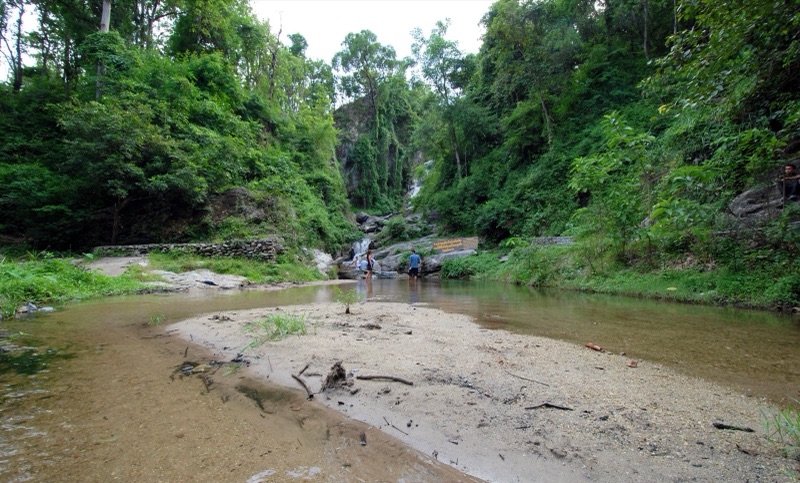
Wang Bua Ban is a deep pool below a cliff, just above Huai Kaeo Falls at the foot of Doi Suthep in Chiang Mai. The name is tied to the story of a young teacher called Bua Ban, told for decades as a woman who died here of a broken heart. The word wang (วังฯ) in the dictionary means a deep pool, a stretch of water that swirls, so the name speaks of both the land and a person.
This article does not decide which telling is true. It takes the story apart and shows which pieces several sources agree on, which come from a single teller, and which were added later by songs, film and the media. We tell it with respect for Khru (teacher) Bua Ban and her family, who have asked that the dead be left in peace.
A real pool at the foot of Doi Suthep
The stream that runs through Wang Bua Ban is the Huai Kaeo. In Kham Mueang a stream coming down from the hills is a huai (ห้วฯยฯ), and water falling from a height is a nam tok (นาฯต฿กฯ). This stream comes down the eastern side of the doi (ดอฯย, mountain) of Suthep, past a cliff and the pool, and then drops as the Huai Kaeo Falls that every Chiang Mai family knows.
The Suthep Municipality page, written by Udom Rungruangsri, describes Wang Bua Ban as a pool below a high rock ledge above Huai Kaeo Falls. Thairath and Sanook (2017) place it in the same spot inside Doi Suthep-Pui National Park. The cliff above the pool is Pha Ngoep. In the dictionary pha (ผา) is a big rock face on a mountain, and ngoep (เงิปฯ) is an overhang, a rock jutting out of the mountain.
The words fit the cliff, but we found no record of who named Pha Ngoep or the Huai Kaeo, or when. The word kaeo has several meanings in the dictionary, so we do not guess where the stream's name came from.
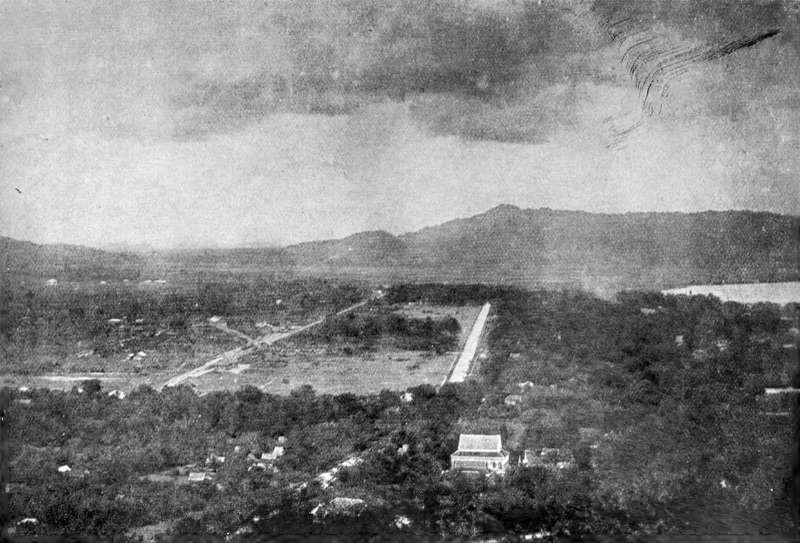
The Huai Kaeo came closer to town once the road up Doi Suthep was built. Khruba Siwichai began it from the Huai Kaeo side on 9 November 1934, and the first car reached the top on 30 April 1935 (Silpa Wattanatham; Moradok Lanna). The road runs close to the falls, and his monument stands where it begins.
From Wang Khulawa to Wang Bua Ban: where the name comes from
Udom Rungruangsri writes that the pool was first called Wang Khulawa or Wang Kula, after a foreigner who is said to have fallen in. The word is not in our dictionary, so we write it in Thai letters only. The other web pages that tell of the old name all copy the same text, so the old name rests on one teller.
The same text quotes the documentary writer Boonchuay Srisawat: the pool was renamed Wang Bua Ban in 1944 because a woman named Bua Ban died there. But Khru Bua Ban's family, and a Thai PBS documentary, put her death in 1946. When the name came into use is therefore unsettled. We give both years and do not choose for the reader.
What the name does show is a person's name becoming a place name, as often happens. Bua (บ฿วฯ, lotus) and ban (บาฯนฯ, to open, to unfold) together mean, word for word, a lotus in bloom.
The real Khru Bua Ban: what her family says
Every account Udom collected calls her Khru Bua Ban; in Kham Mueang a teacher is a khu (ระฯคู). On this the tellers and her family agree. The Chaiwongkaew family published a statement online around 2012 (Pasa Siam) and spoke again in 2022, when several outlets reported it (Sanook, MGR Online, PPTV, The Thaiger). The statement comes from the granddaughter of Khru Bua Ban's brother.
According to it, Khru Bua Ban was the fifth of six children. The family home stood on Kaew Nawarat Road, across from the Prince Royal's College. She taught for about a year as a village teacher in Doi Saket, helped teach Thai at the Hua Eng school (hong hian, โร฿งฯรยฯร), and then taught at the Phra Ratchaya School, today Dara Academy, until the Second World War. The family adds that she was a Christian.
The family says that late in 1945 she went into a pharmacy with a friend and had troubles from that investment. She left home on 3 February 1946, and villagers found her on 7 February. The family says the examination at the time found no sign of assault and no pregnancy (Sanook; The Thaiger; Pasa Siam).
On the question of a lover, the family states that no army officer and no young man from Bangkok was ever part of her life. A male teacher once pursued her, and she moved lodgings to break off contact. The family believes love was not the cause (PPTV; Sanook). This is the family's account, the closest to the events, but still one telling among others, so we set it beside them in the next section.
Six tellers, six stories: who is the man?
The part of the Wang Bua Ban story that changes most is "the man in the story". Below are the accounts Udom Rungruangsri collected, next to the family's statement.
| Year told | Teller | How close | The man in the story |
|---|---|---|---|
| 1968 | Saman Chaiwan (Khon Mueang magazine) | says he knew her well | a married village teacher; tells it as an accident |
| 1979 | Wasan Panthawong (Thai Folk Tales) | told as a folk tale | a district officer who gambled |
| 1988 | Suthathip Sawangphon's thesis (Chiang Mai University) | interviewed a friend of the family | a young man from central Thailand |
| 1997 | Siripong Srikosai, radio host "Ya Bun" | on the radio, fifty years on | a royal guard officer |
| 1998 | Chao Boonsri na Chiang Mai | an interview, fifty years on | a second lieutenant from Bangkok camped at Wat Fa Ham |
| 2012–2022 | The Chaiwongkaew family | older relatives and the examination record | no officer; only a male teacher she kept away from |
Six tellers, five different men. There is one more telling: Pensupa Sukkata (2011) cites research with relatives saying Khru Bua Ban's lover was a Chiang Mai man who never betrayed her, and that her death was an accident; she does not name that research. What every telling shares is small: the name Bua Ban, the pool above Huai Kaeo Falls, and in nearly all of them, that she was a teacher.
Try it yourself in the widget below. The first tab is a map: pick a teller and see which places they name. The second asks you to guess who the man is in each telling. The third splits Wang Bua Ban, Pha Ngoep and Huai Kaeo Falls into words, with Lanna script from the dictionary.
In Kham Mueang lao (เลั่า, to tell) also means to spread talk, to gossip. The table above shows how far a story can change as it passes from mouth to mouth, even among tellers who lived in the same town.
From poem to song: Sanit S.'s Wang Bua Ban
Udom writes that after Khru Bua Ban's death a monk turned the story into a poem for a newspaper. He is said to have lived at Wat Phra Non Pa Ket Thi in Saraphi, or some say on Doi Suthep, and may have signed himself "Loet Lanna". All of this comes with "it is said" from the start, and we tell it that way.
The song Wang Bua Ban is on firmer ground. The Princess Sirindhorn Music Library at Mahidol University records that the words are by Sanit S. (Sanit Siriwisut), a songwriter born in a lane near Warorot Market in Chiang Mai in 1924. He wrote it for a radio drama by the Charu Kanok troupe; the troupe leader thought it suited Mantana Morakul, so it was broadcast and then recorded. Udom adds that Sanit worked from the monk's poem and that the melody is by Arun Hongsawin. We found no recording year in the sources we could check.
The song does not tell the love story in detail. It paints the pool, the falls and the cicadas as a funeral for a heroine lost to love; the music library reads this imagery as drawn from the Vessantara Jataka.
เอาน้ำตกก้องเป็นกลองประโคม ("the roaring falls for the funeral drums") — Wang Bua Ban, words: Sanit S. · sung by Mantana Morakul
The song turned the story of one Chiang Mai woman into one the whole country heard, and fixed "a broken heart" to the name of the pool.
The 1972 film and "a true story"
In 1972 the film Wang Bua Ban came out, directed by S. Kraprayoon and made by Nakhon Ping Films. The poster says "from the story by Malini" and sells it as the true story of a northern girl faithful to love above her own life (Thai Film Reviews; the Thai Bunterng film wiki).
People often ask who wrote the novel Wang Bua Ban. What can be checked is this: the 1972 film credits its story to a writer called "Malini", but we have not found when that novel was first printed. The older works we can check are the newspaper poem and Sanit S.'s song. If you know of a printed edition, tell us and we will add it.
The words "a true story" on the poster are worth noticing. The film came out 26 years after the events and chose the faithful, tragic version. Later travel writing repeated it, for example Chiang Mai CityLife (2006), which tells of a pregnant woman abandoned during the Second World War.
Piece by piece: what is documented, what was added later
Sort the story yourself first. The widget below splits Wang Bua Ban into 14 pieces: tap the box you think fits, then see the reason and the sources. The second tab follows how the story grew, from the name Boonchuay recorded to the family's statement in 2022; press "Compare" on two versions to set them side by side.
An officer from Bangkok
The version the media repeat most is a married army officer from Bangkok. In the accounts Udom collected, it comes from interviews in 1997 and 1998. The oldest article we can check (1968) names a village teacher, and the family says no officer was ever in her life.
Was she pregnant?
The 1968 article and a 1998 interview say so; the family says the examination at the time found no pregnancy. The sources disagree, and the family feels this harms the memory of the dead, so we say only that they disagree and leave it there.
The ghost of Wang Bua Ban
That the pool is cursed or haunted by the phi (ผี, spirit, ghost) of Bua Ban is a belief people tell. Udom's text calls it "a cursed pool", and Thairath (2017) says locals believe it is haunted. What the news can confirm is that the pool is deep and rainy-season flash floods come fast enough for the park to close the area from time to time. The ghost story sits beside a warning with good reasons behind it.
When the legend became news again (2022)
Early in 2022 the Thai PBS programme Truth Never Dies made an episode, "The Wang Bua Ban mystery", asking whether Khru Bua Ban Chaiwongkaew, who died in 1946, really was the heartbroken woman of the legend.
In August that year a band from a Chiang Mai school performed the Wang Bua Ban love legend on a televised singing contest. The clip spread widely, and the family spoke out: the act did not match Khru Bua Ban's real life, including belief scenes at odds with her faith. The school said it had no intention to distort anything and wanted to raise the problem of suicide in society. The family asked for "fairness and peace for the departed" (MGR Online; Sanook).
PPTV (2022) noted that the version villagers tell resembles the story of Sao Khruea Fa: the officer from Bangkok, the pregnancy, and learning too late that he already had a family. Pensupa Sukkata (2011) also sees the song-and-film legend following the same "northern girl abandoned by a Bangkok man" mould. Read more in Sao Khruea Fa: A True Northern Story or Madame Butterfly?
Common mix-ups: what the sources say
The story has been retold so often that some details sound like facts. Below are lines people often hear, and what the sources in this article say.
"Wang Bua Ban is a famous novel"
The 1972 film credits a story by "Malini", but the older works we can check are a newspaper poem and Sanit S.'s song. The story began with the death of a real person, not with a novel.
"Khru Bua Ban was deceived by an army officer"
That is one telling, from interviews in 1997–1998, not the only one, and the family disputes it directly.
"It is all a true story"
What several sources agree on is her name, her work as a teacher, the place and the year 1946. The lover and the cause are still disputed. "A true story" is a selling line of the 1972 film.
"Wang Bua Ban is dangerous because of a ghost"
That is a belief people tell. The danger the news and the park confirm is a deep pool and flash floods in the rainy season.
Summary
- Wang Bua Ban is a real pool below Pha Ngoep, above Huai Kaeo Falls; wang in Kham Mueang is a deep pool.
- Khru Bua Ban was a real teacher in Chiang Mai; her family and Thai PBS put her death in 1946, while the 1944 renaming year is unsettled.
- The man in the story changes with the teller: a village teacher, a district officer, a central Thai man, an army officer; the family says there was no officer.
- The song by Sanit S., sung by Mantana Morakul, and the 1972 film from a story by "Malini" made the broken-heart version the one people remember.
- We do not decide for the reader, and we tell this story with respect for the dead and her family.
Look up the words in this story: วัง เงิบ and ห้วย, then read about the road up the mountain in Khruba Siwichai.
Lanna stories people still half-believe, taken apart into what is on record, what one teller or text first said, and what was added later.
1. Ma Mia: What's Real, What's Legend, What's Fiction · the Royal Gazette, the 1964 book Phet Lanna and Charan's song: what is on record and what was added later
▸ 2. Wang Bua Ban: What's Real, What's Told, What's Tale (you are here) · the teacher's legend above Huai Kaeo Falls: six tellers, a song, a film and the family's own account
3. Sao Khruea Fa: A True Northern Story or Madame Butterfly? · Prince Narathip's sung play adapted from Madame Butterfly, and why people took it for a true northern story
4. Wiang Nong Lom: Did a City Really Sink? · the chronicle's town that sank in one night, set against the Mae Chan fault, archaeology and measured quakes
5. Wiang Kum Kam: Did a City Really Drown? · King Mangrai's town under the Ping river sand: the Fine Arts digs and the open question of when the sand came
6. Lilit Phra Lo: Real, Legend or Fiction? · Sarong, Wiang Lo and the Kalong river: what the poem says, and how later readers placed its towns on a real map
📚 More on Chiang Mai: Chiang Mai (Jiang Mai): Mangrai's City, Gates and Temples · The road up the mountain: Khruba Siwichai
Copyright and courtesy
| Item | Details |
|---|---|
| Song quoted (one line) | Wang Bua Ban · words: Sanit S. (Sanit Siriwisut) · sung by Mantana Morakul |
| Film mentioned | Wang Bua Ban (1972) · director: S. Kraprayoon · story: Malini · Nakhon Ping Films |
| Status | Under copyright; all rights belong to the authors, producers and rights holders |
This article was made by Moradok Lanna, a non-profit website, for learning the Lanna language and culture. It is not an adaptation, translation or new version of the song. We quote only one short line, with credit, for study, criticism and review, as fair use allows (Thai Copyright Act B.E. 2537, section 32). All word explanations come from the dictionary and the sources listed. We do not use the film poster, because it shows the actors' faces.
With thanks and respect to the songwriters, singer, filmmakers and rights holders, and to Khru Bua Ban's family for telling the story from their side. If a rights holder or the family would like anything changed or removed, please write to moradoklanna@gmail.com and we will act promptly.
Sources
- Moradok Lanna dictionary: วัง · ห้วย · น้ำต๋ก · ผา · เงิบ · ดอย · บัว · บาน · คู · โฮงเฮียน · เล่า · ผี
- อุดม รุ่งเรืองศรี. วังบัวบาน [Udom Rungruangsri, Wang Bua Ban]. Suthep Municipality tourism page (collects the accounts of Boonchuay Srisawat, Saman Chaiwan 1968, Wasan Panthawong 1979, Suthathip Sawangphon 1988, Siripong Srikosai 1997 and Chao Boonsri na Chiang Mai 1998)
- Pantip. วังบัวบาน ภาควิจารณ์ [Wang Bua Ban, a commentary] (the same accounts)
- ภาษาสยาม. "วังบัวบาน" ตำนานรักสาวเชียงใหม่ [Pasa Siam: the Wang Bua Ban love legend, with the family's statement] (last edited 8 October 2012)
- Sanook News. (25 August 2022). ไวรัล รร.ดัง ประกวดร้องเพลง รื้อตำนานรักวังบัวบาน ทายาทชี้เรื่องจริงถูกบิดเบือน [A school's contest act revives the legend; the family says the truth was distorted]
- MGR Online. (25 August 2022). ร.ร.ดังเชียงใหม่เจอดรามา หลังโชว์ "ตำนานรักวังบัวบาน" [Relatives say the truth was distorted]
- PPTV. (23 August 2022). ญาติวอนสังคมเปลี่ยนมุมมองตำนาน "วังบัวบาน" [Relatives ask the public to see the legend differently]
- The Thaiger. (25 August 2022). ตำนาน 'รักวังบัวบาน' ไม่ได้ตายเพราะรัก [The Wang Bua Ban legend: not a death for love]
- Thai PBS. (16 February 2022). ความจริงไม่ตาย: ปริศนาวังบัวบาน [Truth Never Dies: the Wang Bua Ban mystery]
- เพ็ญสุภา สุขคตะ. (2011). ปริศนาโบราณคดี: สาวเหนือไม่ใช่สาวเครือฟ้า [Pensupa Sukkata, Northern girls are not Sao Khruea Fa]. Matichon Weekly
- Princess Sirindhorn Music Library, Mahidol University. ผลงานของนักแต่งเพลง สนิท ศ. ตอนที่ ๑ [Songs of Sanit S., part 1]
- Thai Film Reviews. วังบัวบาน ๒๕๑๕ [Wang Bua Ban, 1972: poster and credits]
- Thai Bunterng film wiki. วังบัวบาน (๒๕๑๕) [Wang Bua Ban (1972)]
- Thairath. (15 October 2017). news report on visitors entering the water at Wang Bua Ban (in Thai)
- Sanook News. (16 October 2017). park closes Wang Bua Ban and Huai Kaeo falls after a flash flood (in Thai)
- Sanook News. (20 July 2018). Doi Suthep-Pui bans swimming at all waterfalls after heavy rain (in Thai)
- Chiang Mai CityLife. (August 2006). Editorial: August 2006
- Silpa Wattanatham. 9 November 1934: Khruba Siwichai starts the road up Doi Suthep (in Thai)
- Silpa Wattanatham. Dara Academy, the first school in Chiang Mai (in Thai)
- Widget map: OpenStreetMap contributors (ODbL)
Practise the words from this article
Flip through 12 flashcards of the Lanna words used in this article.


