
Photo: Hartmann Linge / Wikimedia Commons (CC BY-SA 4.0)
Chiang Mai (Jiang Mai): Mangrai's City
Chiang Mai is Jiang Mai in Kham Mueang (Northern Thai) (ชยฯงไห่มฯ, Kham Mueang reading jiang mai). The Moradok Lanna dictionary records that the city "was founded in 1296 CE as the capital of the Lanna kingdom, which remained an independent state until 1558". Today Chiang Mai is one of the eight Lanna provinces, yet the moat, walls and corners King Mangrai laid out still shape the city every day.
This article does not retell the legend. It walks around the city itself through Kham Mueang: the name, the founding date scholars have worked out, the square walled plan, the motto, the provincial tree, and the words Chiang Mai people use for their own town.
Tap through the Kham Mueang name, the motto and the provincial tree of Chiang Mai in this tool.
Jiang Mai means "new city"
The dictionary explains that jiang (ชยฯง, jiang) means a city or town, as in Jiang Mai, Jiang Hai (Chiang Rai) and Jiang Dao. Jiang Mai therefore simply means "new city". Central Thai says chiang; Khon Mueang (Northern Thai people) say jiang, following the ch to j sound rule explained in Ch becomes J in Kham Mueang.
Another word that always comes along is wiang (วยฯง, wiang), which the dictionary defines two ways: a town or small town, and a wall or fortified camp. A wiang is both the town and what surrounds it. The people of Chiang Mai are called jao jiang mai (ชาวฯชยฯงไห่มฯ, jao jiang mai) in Kham Mueang.
In its entry for due mueang the dictionary also calls the city Mueang Nopphaburi, and the provincial motto calls Chiang Mai Nakhon Phing. They are all names for the same city.
Founded in 1296: but on which day?
The year 1296 is agreed by all. Prasert na Nagara, the scholar of inscriptions and calendars, wrote an article titled "The founding day of Chiang Mai, 12 April 1296" in Silpa Wattanatham magazine (1990), and 12 April became the date most people know.
An article in Chiang Mai News (2021) quotes the Wat Chiang Man inscription, which records the era, day and watch at which the city was founded, and converts it to Thursday, 19 April, at about four in the morning. The two dates do not contradict each other. The seven-day gap comes from two calendars: 12 April counts by the Julian calendar, the standard of that time, while 19 April is the same day counted back with the Gregorian calendar we use today.
The square plan: moat, walls, corners and gates
Seen from above, the old city is an almost perfect square surrounded by a moat. The archaeological site database of the Princess Maha Chakri Sirindhorn Anthropology Centre cites Sarassawadee Ongsakul (2000) for an inner brick wall about 1,600 metres on each side, and Sasithorn Uicharoen (2004) for the moat and wall being started in 1292 and finished in 1296.
Kham Mueang has a word for every part of the wiang:
| Part of the city | Kham Mueang | Dictionary meaning |
|---|---|---|
| Moat | khue mueang (ฅืเมิอฯง) | city moat |
| City wall | mek wiang (เมกฯวยฯง) or lam wiang (ลำวยฯง) | city wall, rampart |
| Corner | jaeng (แจ่งฯ) | corner, diagonal, as in jaeng ban jaeng mueang |
| Gate | pa-tu (ปตู) | gate, door |
| City centre | due mueang (ดืเมิอฯง) | the central point of a city |
The four corners, according to the Sirindhorn Centre database, are Jaeng Si Phum (north-east), Jaeng Khatam (south-east), Jaeng Ku Hueang (south-west) and Jaeng Hua Lin (north-west). Chiang Mai News adds that Jaeng Si Phum is considered the head of the city, while Jaeng Hua Lin is the highest corner, taking water from the Huai Kaeo stream below Doi Suthep to feed the moat.
The five inner gates are Hua Wiang (Chang Phueak) in the north, Chiang Rueak (inner Tha Phae) in the east, Chiang Mai in the south, Saen Pung in the south-west and Suan Dok in the west. The square in front of Tha Phae Gate that visitors know so well is khuang pa-tu ta pae (ข่วฯงระฯบตูท่าฯแพ, khuang pa-tu ta pae) in Kham Mueang.
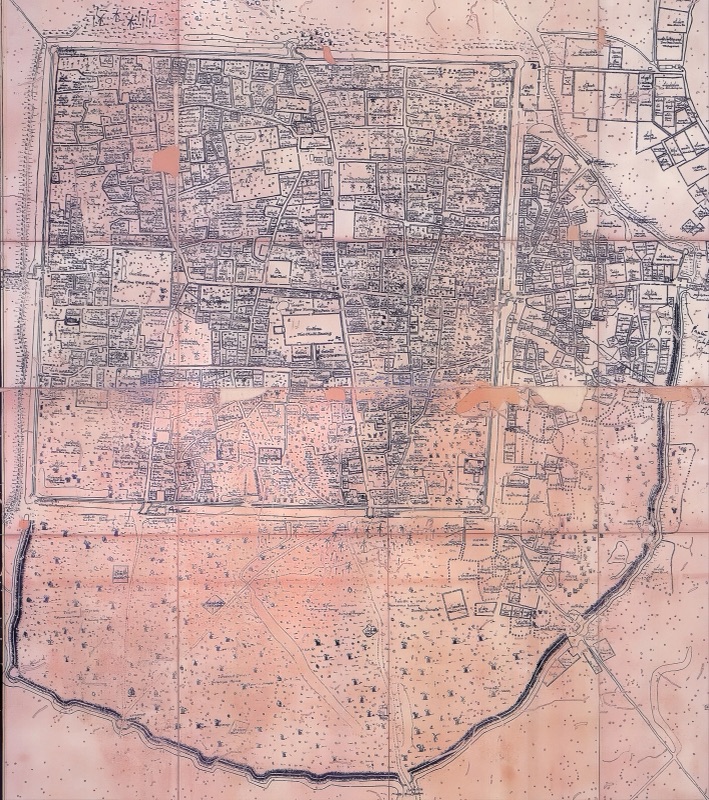
Image: unknown maker / Wikimedia Commons (Public domain)
Besides the inner brick wall, Chiang Mai has an outer earth wall curved like a crescent moon, running from Jaeng Si Phum along the Mae Kha stream to meet the inner wall at Jaeng Ku Hueang. The same database cites Worawit Hatsaphak (1996): the wall guarded against both enemies and floods from the east. The outer wall has five gates of its own, among them Chang Moi, Hai Ya and Khua Kom.
The gate of the dead and the gatekeeper
City gates were not only for coming and going. The dictionary has pa-tu phi (ปตูผี, pa-tu phi), "the gate set aside for carrying the dead out of the city walls". Chiang Mai News says that in Chiang Mai this was Saen Pung Gate, because cremating or burying the dead inside the walls was considered unlucky. The man in charge of who passed through a city gate was the ja pa-tu (จ่าระฯบตู, ja pa-tu).
If you want to see a real corner bastion, Jaeng Si Phum in the cover photo still stands by the moat. The Sirindhorn Centre database records that it has been built and restored three times, most recently by the Fine Arts Department in 1986.
The city's navel, the Inthakhin pillar and King Kawila's revival
At the heart of the wiang is the due mueang, the city's navel. The dictionary tells that King Mangrai built a temple at the very centre of the city, so people came to call it "Wat Sadue Mueang", the temple of the city's navel. The city pillar, the Inthakhin, once stood there.
Chiang Mai did not flourish without a break. After the wars with Burma the city fell into ruin and its people fled into the forest. The dictionary names the revival under King Kawila kep phak sai sa kep kha sai mueang (เกัปฯผักฯไส่ซ้าเกัปฯข้าไส่เมิอฯง, kep phak sai sa kep kha sai mueang): gathering people back into the city like gathering vegetables into a basket. The Sirindhorn Centre database records that in 1796 King Kawila restored the fortifications and dredged the moat.
King Kawila also moved the Inthakhin pillar to Wat Chedi Luang, as explained under khao in-tha-khin (เขั้า±นทฯขี, khao in-tha-khin), and planted a great yang na tree beside it, called the mai mai mueang jiang mai (ไม้หมฯายฯเมิอฯงชยฯงไห่มฯ, mai mai mueang jiang mai), the city-marker tree of Chiang Mai. The yearly worship of the pillar is told in Sai Khan Dok, and the king's story in King Kawila.
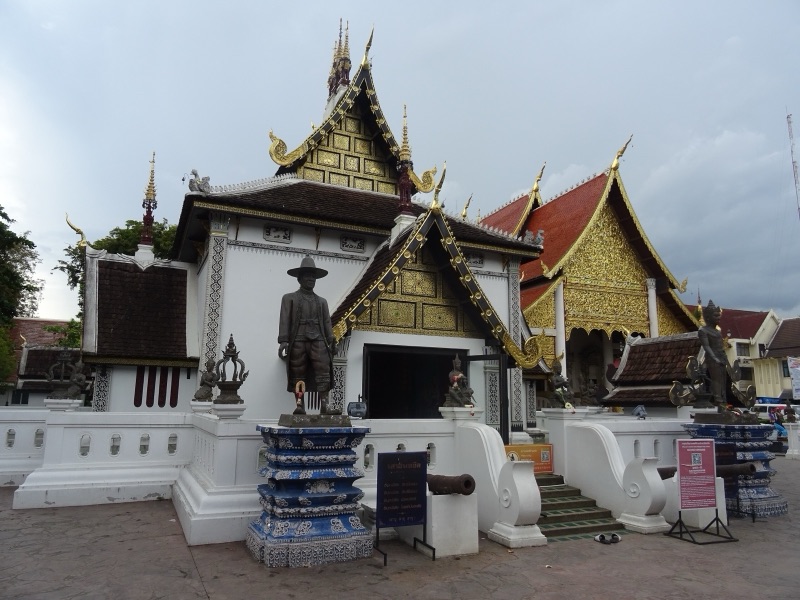
Photo: Christophe95 / Wikimedia Commons (CC BY-SA 4.0)
The later rulers of Chiang Mai were the chao luang jiang mai (เจั้าเจั้าหลฯวฯงชยฯงไห่มฯ, chao luang jiang mai). The dictionary lists nine of them, from King Kawila to Major General Chao Kaeo Nawarat, the last.
The Chiang Mai motto and the dok kwao
The dictionary records the provincial motto in its entry for Jiang Mai:
Motto: "Doi Suthep is its glory, its customs its grace, its flowers a delight to the eye, its name the precious Nakhon Phing."
| Line of the motto | What it refers to |
|---|---|
| Doi Suthep is its glory | the relic chedi of Doi Suthep, the relic of the goat year in Birth-year relics |
| its customs its grace | festivals through the year, such as Sai Khan Dok and the Lanna New Year |
| its flowers a delight | the many flowers of the city |
| the precious Nakhon Phing | the city's name, on the Ping River |
The provincial tree of Chiang Mai is the flame of the forest, which Khon Mueang call dok kwao (ดอฯกกวฯาวฯ, dok kwao). The dictionary describes a tree 10–15 metres tall with crooked trunk and branches, its flowers in clusters shaped like pea flowers, soft and velvety, in orange or yellow.
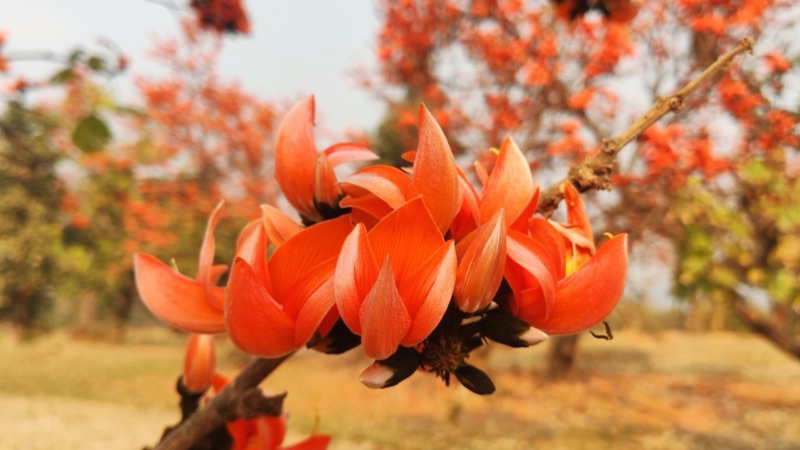
Photo: SMarndi / Wikimedia Commons (CC BY-SA 4.0)
See the mottos and trees of the other seven provinces in The eight Lanna provinces, and more flowers with Kham Mueang names in Lanna flowers.
The words of the jao jiang mai
Chiang Mai people have their own words for talking about their town. Those who live in town are the jao wiang (ชาวฯวยฯง, jao wiang), and the crowded, lively part of town is nai wiang (ไนวยฯง, nai wiang); the dictionary's example is nai wiang jiang mai, "in Chiang Mai town".
A big central market open all day is a kat luang (กาดฯหลฯวฯง, kat luang), and the dictionary's first example is the kat luang of Chiang Mai. For market words, see Kad: Lanna market words.
Speaking the Lanna language is u kam mueang (อู้คำฯเมิอฯง, u kam mueang). Someone who speaks central Thai but lets a northern accent or northern words slip in is said to u thai sap mueang (อู้ไทยฯสาปฯเมิอฯง, u thai sap mueang), often leaving people from elsewhere puzzled.
Summary
- Jiang Mai is Chiang Mai in Kham Mueang. Jiang means city, so the name means "new city".
- King Mangrai founded the city in 1296. Prasert na Nagara dated it to 12 April (Julian calendar), which is 19 April when counted with today's calendar.
- The wiang is square, with a khue mueang moat, mek wiang or lam wiang walls, four jaeng corners and five inner pa-tu gates, plus an outer earth wall.
- The due mueang is the city's navel; King Kawila moved the Inthakhin pillar to Wat Chedi Luang in the era of kep phak sai sa kep kha sai mueang.
- The provincial tree is the dok kwao, and townspeople are jao wiang who go to aew kat luang and u kam mueang.
Look up more Chiang Mai words in the Moradok Lanna dictionary (in Thai), and read about the older city that came before Chiang Mai in La Pun.
📚 The whole series: see the provinces, old cities and peoples on one map in Places of Lanna: 8 Provinces, Old Cities and Peoples.
Sources
- Moradok Lanna dictionary (in Thai): เจียงใหม่ · เจียง · เวียง · คือเมือง · แจ่ง · ปะตู๋ผี · ดือเมือง · ดอกกว๋าว · อู้ไทยสาบเมือง
- ประเสริฐ ณ นคร (Prasert na Nagara). (1990). วันสร้างเมืองเชียงใหม่ ๑๒ เมษายน พ.ศ. ๑๘๓๙ [The founding day of Chiang Mai, 12 April 1296]. Silpa Wattanatham 11(5), 38–43
- ทรัพย์อนันต์ ซื่อสัตย์ (ed.). ป้อม คูเมือง กำแพงเมืองเชียงใหม่ [Forts, moat and city walls of Chiang Mai]. Database of important archaeological sites in Thailand, Princess Maha Chakri Sirindhorn Anthropology Centre (citing Sarassawadee Ongsakul 2000, Sasithorn Uicharoen 2004, Thotsaphon Sodabanlu 2003, Worawit Hatsaphak 1996)
- Chiang Mai News. (2021, 15 March). ประตูเมืองเชียงใหม่: ประวัติศาสตร์ ความเชื่อ และการท่องเที่ยว ep.1 [Chiang Mai's city gates: history, beliefs and tourism, part 1]
- All images from Wikimedia Commons, credited under each picture
Practise the words from this article
Flip through 25 flashcards of the Lanna words used in this article.
Look up "เจียงใหม่" in the Moradok Lanna dictionary (in Thai)


