
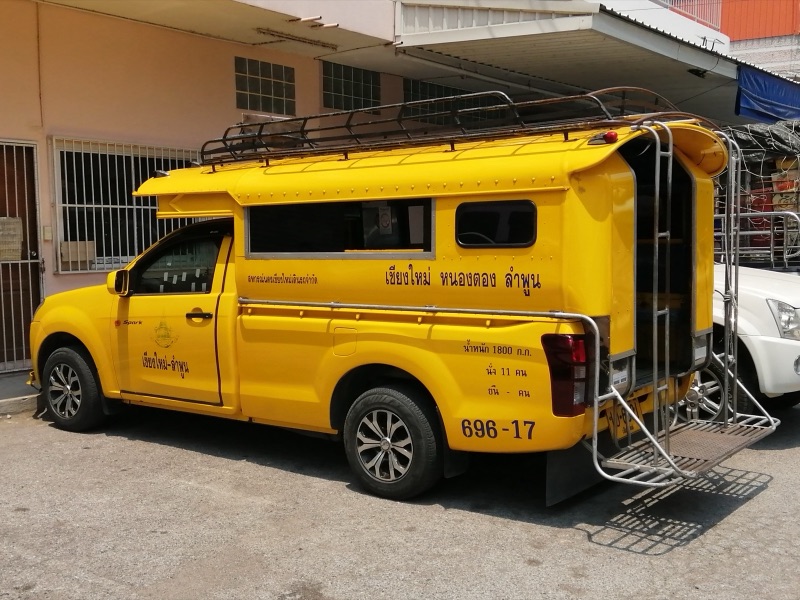
Photo: Patiparn.Nice2002bkk / Wikimedia Commons (CC BY-SA 4.0)
Kham Mueang Survival Phrases: 40 Lines for Travellers
The Kham Mueang survival phrases below are 40 short lines a visitor to Lanna can really use from morning to night: greeting people, saying thanks, ordering food, bargaining, asking the way and getting help. If you remember only one, make it yin di (ยินฯดี), which in Kham Mueang (Northern Thai) means "thank you".
This is the closing part of our series Travelling Lanna like a local. It gathers 40 lines from the earlier lessons. Every word comes from the Moradok Lanna dictionary (in Thai) or from phrases already printed in our articles. Where the dictionary has no word, we do not guess; we say so at the end.
Tap the cards below to practise, pick a situation, star the lines you want, then press print for a one-page cheat sheet to carry.
Before you start: 3 tips for sounding local
- End politely. Women end with jao (เจั้า); men can simply use the central-Thai khrap, because the dictionary has no Kham Mueang polite ending for men. More in Sentence-ending particles.
- Speak slowly, smile, repeat. Locals are happy to teach. If you cannot follow, ask them to slow down (group 3).
- Read the label on each card. A green label means a word or phrase listed in the dictionary; a red label means a line we built from dictionary words, the way our series posts do.
1. Greetings and goodbyes
Locals greet with a warm question such as pai tang dai ma (ไพทาฯงฯไดมา, "where have you been?"). It is not nosiness; answer briefly and smile. Details and the wai are in How to greet in Chiang Mai.
| # | Kham Mueang | Lanna script | Meaning |
|---|---|---|---|
| 1 | sawatdi jao | สัวฯªดี | Hello (men end with khrap) |
| 2 | pai tang dai ma | ไพทาฯงฯไดมา | Where have you been? (a greeting) |
| 3 | pai aeo | ไพแอ่วฯ | Out sightseeing (your answer) |
| 4 | pai kat | ไพกาดฯ | To the market (your answer) |
| 5 | kin khao laeo ka | กินฯเขั้า | Have you eaten yet? |
| 6 | kin laeo jao | กินฯเขั้า | Yes, I've eaten |
| 7 | mue ban | เมิอฯอบ้าฯนฯ | Heading home (also a way to leave) |
| 8 | yu di mi suk | อยฯู่ดีมีสุข์ | May you live well and happy |
Lines 5 and 6 use the dictionary word kin khao (กินฯเขั้า) plus …laeo ka. The dictionary's own example is aap nam laeo ka, "have you bathed yet?". Line 8 is a blessing that elders give to younger people: raise your palms in a wai and answer yin di jao or yin di khrap.
2. Thanks, sorry and politeness
In central Thai, yin di means "glad". In Kham Mueang it is the word for "thank you". The familiar khop jai and khop khun are not headwords in the Lanna dictionary.
| # | Kham Mueang | Lanna script | Meaning |
|---|---|---|---|
| 9 | yin di | ยินฯดี | Thank you |
| 10 | yin di jat nak | ยินฯดีชาดฯนักฯ | Thank you very much |
| 11 | su ma toe | สูมาเทิอฯะ | Sorry (men and women) |
| 12 | su ma toe jao | สูมาเทิอฯะเจั้า | Sorry (the polite form for women of any age) |
| 13 | bo pen yang | บเปนฯหัยฯง | No problem, never mind |
| 14 | bo ao jao | บ | No, thank you (the dictionary's own example) |
| 15 | maen laeo | แม่นฯ¦วฯ | Yes, that's right |
Learn this pair: when someone apologises, answer bo pen yang; when someone helps you, answer yin di. More negatives are in Negation words (bo) and more crowd-pleasers in Kham Mueang words locals love.
3. Talking and addressing people
Calling people by kin words shows respect. Call an older stall-holder ai (a man) or pi (a woman), an elderly person po ui or mae ui, and a monk tu jao.
| # | Kham Mueang | Lanna script | Meaning |
|---|---|---|---|
| 16 | u kam mueang bo jang | อู้คำฯเมิอฯง (u kam mueang) | I can't speak Kham Mueang |
| 17 | u ja ja | ช้า (ja) | Please speak slowly |
| 18 | u muan | อู้ม่วฯร | You speak nicely (a compliment you may hear) |
| 19 | ai · pi | อ้ายฯ · พี่ | Older brother · older sister |
| 20 | po ui · mae ui | พํ่อฯอุ้ย · แม่อุ้ | Elderly man · elderly woman |
| 21 | tu jao | ทุเจั้า | A monk (of any seniority) |
The word ja (ช้า) means "slow". The dictionary gives tiao ja ("walk slowly") and kin ja ("eat slowly"), so u ja ja is a natural extension. The jang in u bo jang means "skilled", not "to hire". If someone says u muan, they are praising how you speak; answer yin di. For temples and monks see Lanna temple etiquette.
4. Eating
At the table a host says kin toe ("go ahead and eat") and you praise the food with lam tae. If you cannot take chilli, say so before ordering. Sticky-rice and khantoke manners are in Eat like a local in Chiang Mai, and dishes worth trying are in What to eat in Chiang Mai.
| # | Kham Mueang | Lanna script | Meaning |
|---|---|---|---|
| 22 | kin toe | กินฯเทิอฯะ | Go ahead, eat |
| 23 | lam tae | ลำแท้ | Really delicious |
| 24 | lam ko | ลำกํ่อฯ | Is it tasty? |
| 25 | yak khao | อยฯากฯเขั้า | I'm hungry |
| 26 | bo ao phet | บ · เผัดฯ | Not spicy, please |
| 27 | phet noi diao | เผัดฯ · ห้นฯอฯยดยฯว | Just a little spicy |
| 28 | ao mae | ´า · แหมฯ | More, please |
| 29 | im laeo, po laeo | อิ่มฯ · พํอฯ | I'm full, that's enough |
For phrases built from several words, the "Lanna script" column shows only the dictionary headword for each word, in order. It is not the whole sentence written in Lanna script: the dictionary does not list those sentences as single entries, and we do not guess spellings.
5. Shopping and bargaining
Bargain with a smile. Ask the price with tao dai (เทัาฯฯได), say paeng ka if it feels high, then ask for a reduction gently. Numbers and manners are all in Market numbers and bargaining.
| # | Kham Mueang | Lanna script | Meaning |
|---|---|---|---|
| 30 | tao dai | เทัาฯฯได | How much? |
| 31 | paeng ka | แพงฯค่าฯ | Expensive (high price) |
| 32 | yom hue dai ko jao | ย่อฯมหื้ · ได้กํอฯ | Could you take a little off? |
| 33 | thaem hue dai ko jao | แถมฯ · ได้กํอฯ | Could you add a little extra? |
| 34 | kho pho ko jao | ขํอฯ · ผํอฯ | May I have a look first? |
The ending ko turns a sentence into a question (dai ko = "can I/can you?"), so it works with almost any line. For other question forms see Kham Mueang question words.
6. Getting around and getting help
The dictionary has few direction words, but enough to point and ask: lat sue (ลัดฯซื่, "cut straight through") and long tang (ห฿ลฯงทาฯงฯ, "to lose one's way").
| # | Kham Mueang | Lanna script | Meaning |
|---|---|---|---|
| 35 | sai · khwa | ซ้ายฯ · ขวฯา | Left · right |
| 36 | lat sue | ลัดฯซื่ | Go straight on |
| 37 | kai | ไกลฯ | Far |
| 38 | long tang | ห฿ลฯงทาฯงฯ | I'm lost |
| 39 | suam | ส้วฯม | Toilet |
| 40 | hong ya | โร฿งฯอยฯา | Hospital |
The dictionary lists sai and khwa both as opposites and as the calls a farmer shouts to steer oxen or buffalo when ploughing. Locals will understand them for directions, but point with your hand as well.
Asking for help: what the dictionary has and what it lacks
The dictionary has chuai (help), chep (hurt, ill) and puat (ache), but no ready-made "help!" phrase, so we do not invent one. In an emergency use the official numbers. The UK Foreign, Commonwealth & Development Office lists them for visitors to Thailand: police 191, ambulance 1669, fire 199 and tourist police 1155.
What the dictionary does not have (we do not guess)
- "Near" is not found as a Kham Mueang word; only kai ("far") is.
- "Turn left / turn right" is not found as a phrase; point, or use sai and khwa as above.
- "Thank you" as khop jai or khop khun, "khrap" and "noe" are not main dictionary headwords (noe appears only inside some examples).
- Bathroom (hong nam), police, red truck (rot daeng) and "goodbye" are not found as Kham Mueang words, so we use suam and the emergency numbers instead.
If you find these words elsewhere, search the Moradok Lanna dictionary (in Thai) again; it keeps growing.
Try the situations
After practising the cards, test yourself: which line fits each situation?
Summary
- Greet = pai tang dai ma · answer = pai aeo, pai kat · leave = mue ban
- Thank = yin di · sorry = su ma toe · no problem = bo pen yang
- Eat = kin toe, lam tae, bo ao phet · buy = tao dai, paeng ka
- Ways = lat sue, kai, long tang · emergency = call 191, 1669, 1155
- End with jao (or khrap), speak slowly and smile: locals hear that you are trying.
Look up more words in the Moradok Lanna dictionary (in Thai). To plan the year's festivals, read Lanna festivals 2027: when to go.
Sources
- Moradok Lanna dictionary (in Thai): ยินดี · ไปตางใดมา · ไปแอ่ว · ลำแต๊ · เต้าใด · ลัดซื่อ · หลงตาง · โฮงยา
- Series posts: How to greet in Chiang Mai · Kham Mueang words locals love · Eat like a local in Chiang Mai · Market numbers and bargaining · Kham Mueang question words
- Emergency numbers: UK Foreign, Commonwealth & Development Office, Thailand travel advice: getting help (checked 21 November 2026).


