
Photo: Christophe95 / Wikimedia Commons (CC BY-SA 4.0)
Lanna and Sri Lanka: The Road of Buddhism
Lanna and Sri Lanka lie on opposite sides of the Bay of Bengal. They never went to war and did little trade, yet no distant land left as many traces in Lanna's temples, scriptures and monastic life as Sri Lanka. The Buddhism that people in Lanna have followed for centuries calls itself the Lankan lineage (Lankawong), "the line handed down from Lanka", and monks from Chiang Mai really did cross the sea to be ordained again there.
This article is part of the series Lanna and the World. It traces where the road began, who travelled it, how it reached Lanna in two waves, and what it left behind, from a bodhi tree and palm-leaf scriptures to the legend of a Buddha image that Chiang Mai bathes every New Year.
Kham Mueang has a word that tells the whole story at once: Hon Pa Daeng (hon pa daeng, ห฿นฯป่าแดงฯ), which the dictionary explains as "monks of the Wat Pa Daeng school, or those who follow the teaching of Wat Pa Daeng ... which is of the Lankan lineage".
- Years are given CE; for events in Lanna and Siam the Thai B.E. year is added where the sources use it (B.E. = CE + 543).
- Legend and record: anything that comes from legend says "by legend", and where the chronicles of two schools disagree, both versions are told.
- The map in the widget shows where people and things started and ended up, not actual sea routes, because most sources do not record the route.
Where Lanka sat in Lanna's world
Lanna people called the island Lanka or Lankathawip, after its name in the Pali scriptures; today it is the country of Sri Lanka, south of India. The name still lives in a Kham Mueang temple word, pha langka (pha langka, ผ้าลังกฯา), which the dictionary explains as "the monk's robe, the outer robe of a monk, one of the three robes".
Sri Lanka mattered to Lanna because it was where Theravada (therawat, เถรวาฯทฯ) Buddhism was kept and written down from early times. The dictionary defines Theravada as "the southern school of Buddhism ... widely followed in Thailand, Myanmar, Lanka, Laos and Cambodia". Monks across the region looked to Lanka as the model for proper ordination and study under the monastic rules.
This was never a relationship between two kingdoms as such. There were no armies and no tribute. What travelled was monks, scriptures, relics and bodhi trees, and they often passed through the Mon country, Sukhothai or Ayutthaya before they reached Chiang Mai.
The source: Buddhism reaches Lanka
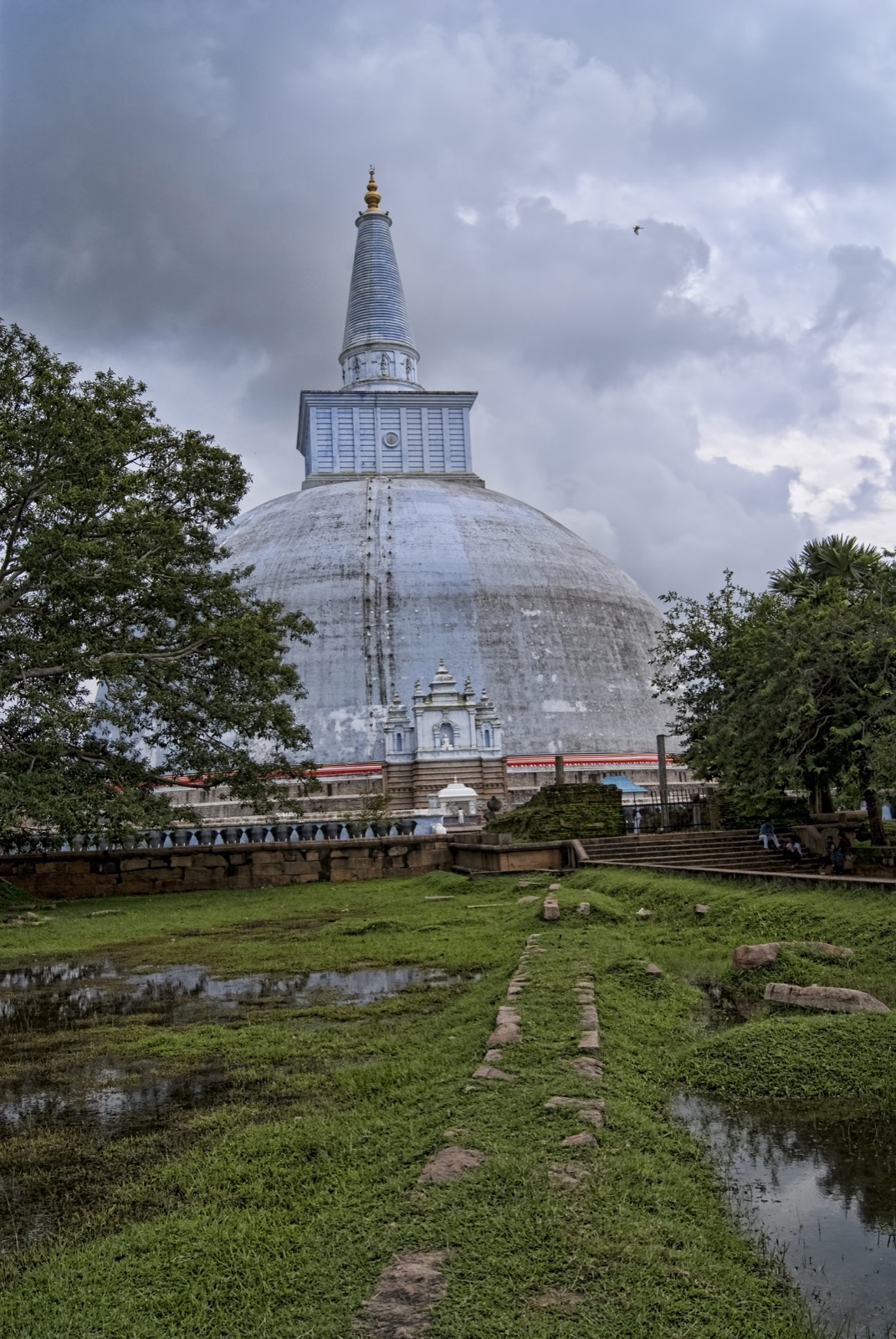
According to the Lankan chronicles, the monk Mahinda, generally believed to be a son of the Indian emperor Ashoka, brought Buddhism to Lanka around the mid-3rd century BCE. King Devanampiya Tissa accepted it and founded the Mahavihara at Anuradhapura, for centuries the centre of Theravada in Lanka (Britannica). The same encyclopaedia notes that Mahinda's name is not found in Ashoka's inscriptions, so his story rests mainly on the Lankan chronicles.
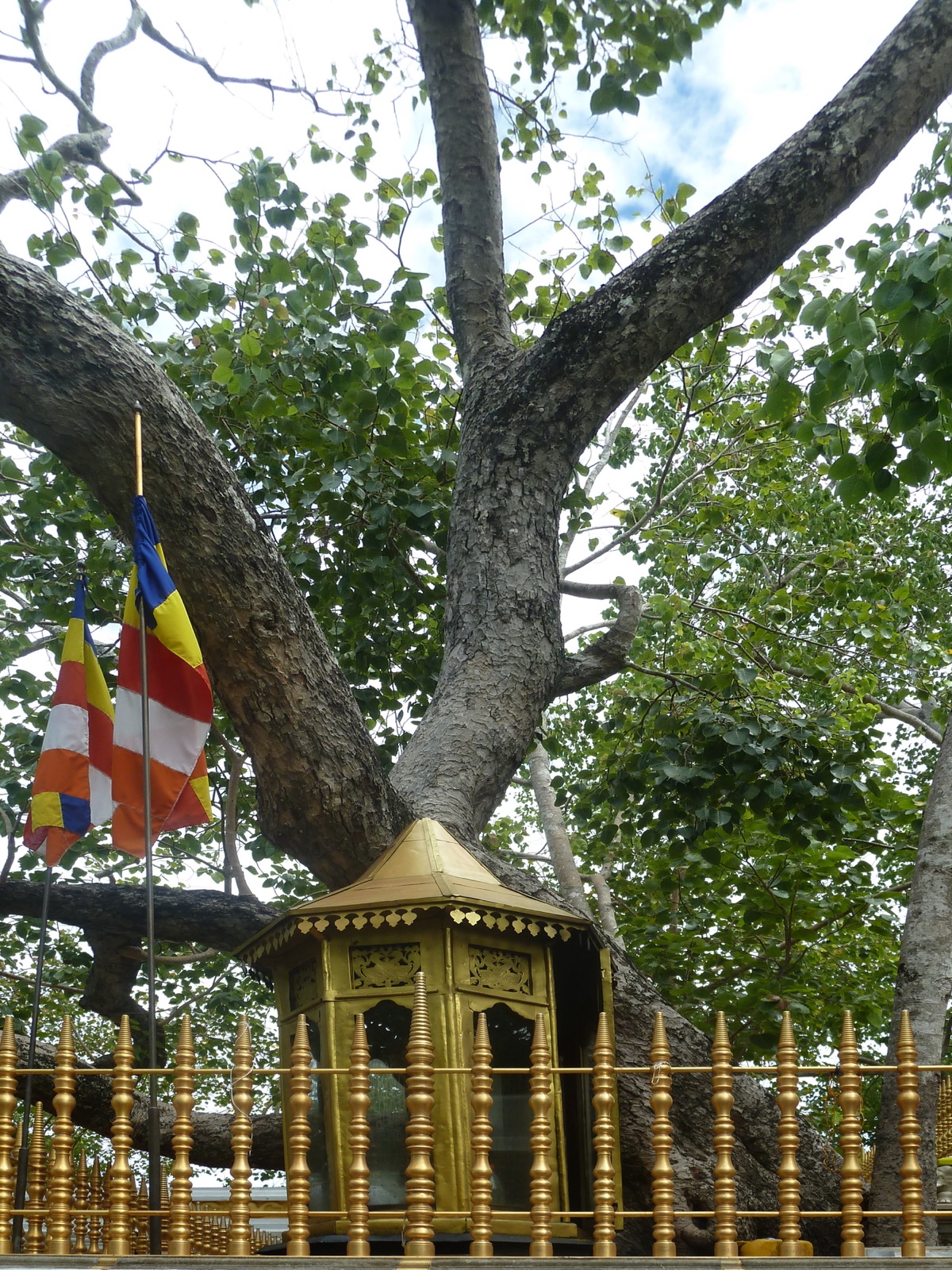
At Anuradhapura stands a sacred bodhi tree said to have grown from a cutting of the Bodh Gaya tree, and UNESCO lists the Sacred City of Anuradhapura as a World Heritage site. In Kham Mueang the bodhi tree is mai sali (mai sali, ไม้ระฯสี), "the bodhi tree; the sacred Sri Maha Bodhi tree". The word will come back at Wat Chet Yot.
The Pali canon and the Mahavamsa: Lanka wrote it, Lanna read on
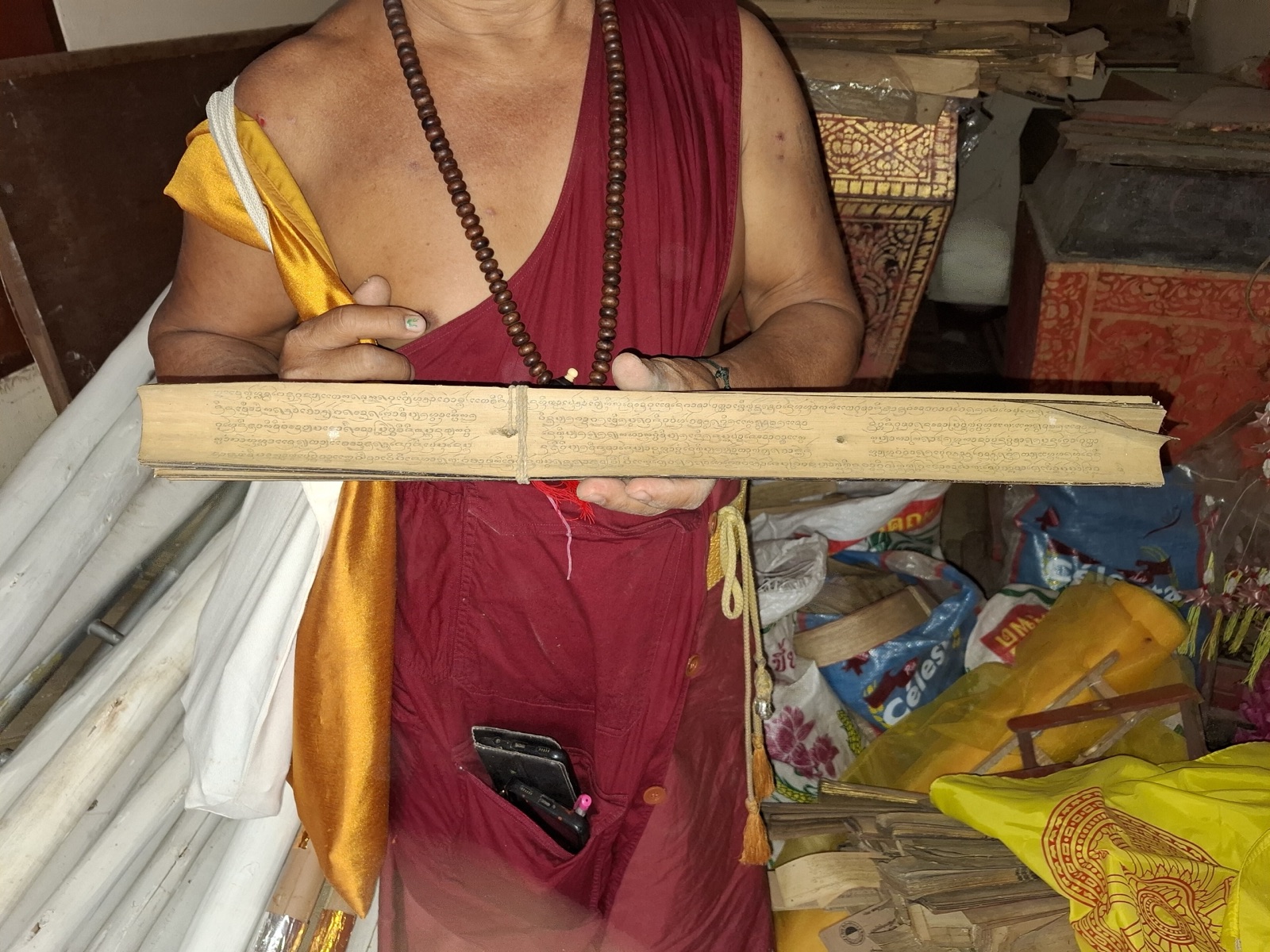
At first the Buddha's teaching was passed on by memory. Britannica explains that the Pali Tipitaka was first written down in the Theravada communities of Sri Lanka, probably in the 1st century BCE; the scholar Michael Witzel (2009) likewise calls it the "supposedly first written version", which appeared in Sri Lanka shortly before the common era. This Pali canon is the same one Lanna studied and inscribed on palm leaves (bai lan, ไบลานฯ), creating palm-leaf scriptures (tham bai lan, ธัม์มฯไบลานฯ), "scriptures inscribed on palm leaves", kept in temple libraries all over the North.
Lanka also gave a model for writing history. The Mahavamsa, Lanka's Pali chronicle, was composed around the 5th or 6th century, probably by the monk Mahanama, and tells the story of Buddhism together with the line of kings. Britannica cautions that parts of it mix in the supernatural and must be read with care.
That model travelled to Lanna. Sirisak Aphisakmontri and Thanikan Worathammanon (2017) show that the Mulasasana chronicle, Wat Suan Dok version, follows the outline of the Mahavamsa and Dipavamsa closely: it opens with the life of the Buddha and only then turns to Buddhism in the land. Lanna calls this kind of writing a tamnan (tam nan, ตํานาฯ). There is more on this in The Chiang Mai Chronicle.
What is the "Lankan lineage"?
In Buddhism a man is ordained as a monk by a chapter of monks who were themselves properly ordained, in an unbroken line back to the Buddha's time. If that line breaks or is in doubt, monks go to receive ordination again from a chapter they trust. The Lankan lineage therefore means monks whose line of ordination comes from Lanka.
After Parakramabahu I (r. 1153–1186) united the Sri Lankan sangha at Polonnaruwa, Lanka became the place where monks from Burma, the Mon country and the Tai lands wanted to be ordained and to study. Julispong Chularatana explains that all three Tai states, Sukhothai, Lanna and Ayutthaya, encouraged their monks to study at these Theravada centres and bring the "right way" home.
For Lanna the road arrived in two waves. Lanna called the schools of monks that grew out of them hon, "school": the first wave became Hon Suan Dok and the second Hon Pa Daeng. Both were Theravada monks (phikkhu, ภิกขฯ); they differed in when, and by which road, their line came from Lanka.
The first wave: through the Mon country and Sukhothai to Wat Suan Dok (1369)
The first wave did not come straight from Lanka. Julispong writes that around 1331 a group of Mon monks went to study in Lanka; one of them set up a school at Mueang Phan in the Mon country and was honoured as the Udumbara Mahasami. Later two monks from Sukhothai, Sumana and Anomadassi, were ordained again at this school and took its teaching back to Sukhothai under King Lithai. Phra Phongrawee Uttarabhaddo and colleagues (2025) tell the same story.
In 1369 (B.E. 1912) King Kue Na of Chiang Mai invited the elder Sumana north. Phra Phongrawee and colleagues note that he brought a full chapter of five Lankan-lineage monks, so that young men could be ordained correctly. He stayed first at Wat Phra Yuen in Lamphun; then King Kue Na built Wat Bupparam, better known as Wat Suan Dok, for him in Chiang Mai. His followers became Hon Suan Dok (hon suan dok, ห฿นฯสวฯรดอฯก), which the dictionary describes as those who "follow the teaching of the Lankan lineage, the old Sihala school".
Julispong also suggests that sending Sumana north with relics may have had a political side: Sukhothai was looking for allies against Ayutthaya, so religion was both faith and a bridge between courts. The full story of Sumana, Wat Suan Dok and the Doi Suthep relic is in King Kue Na.
Phra Phuttha Sihing: the legend of a Buddha image from Lanka
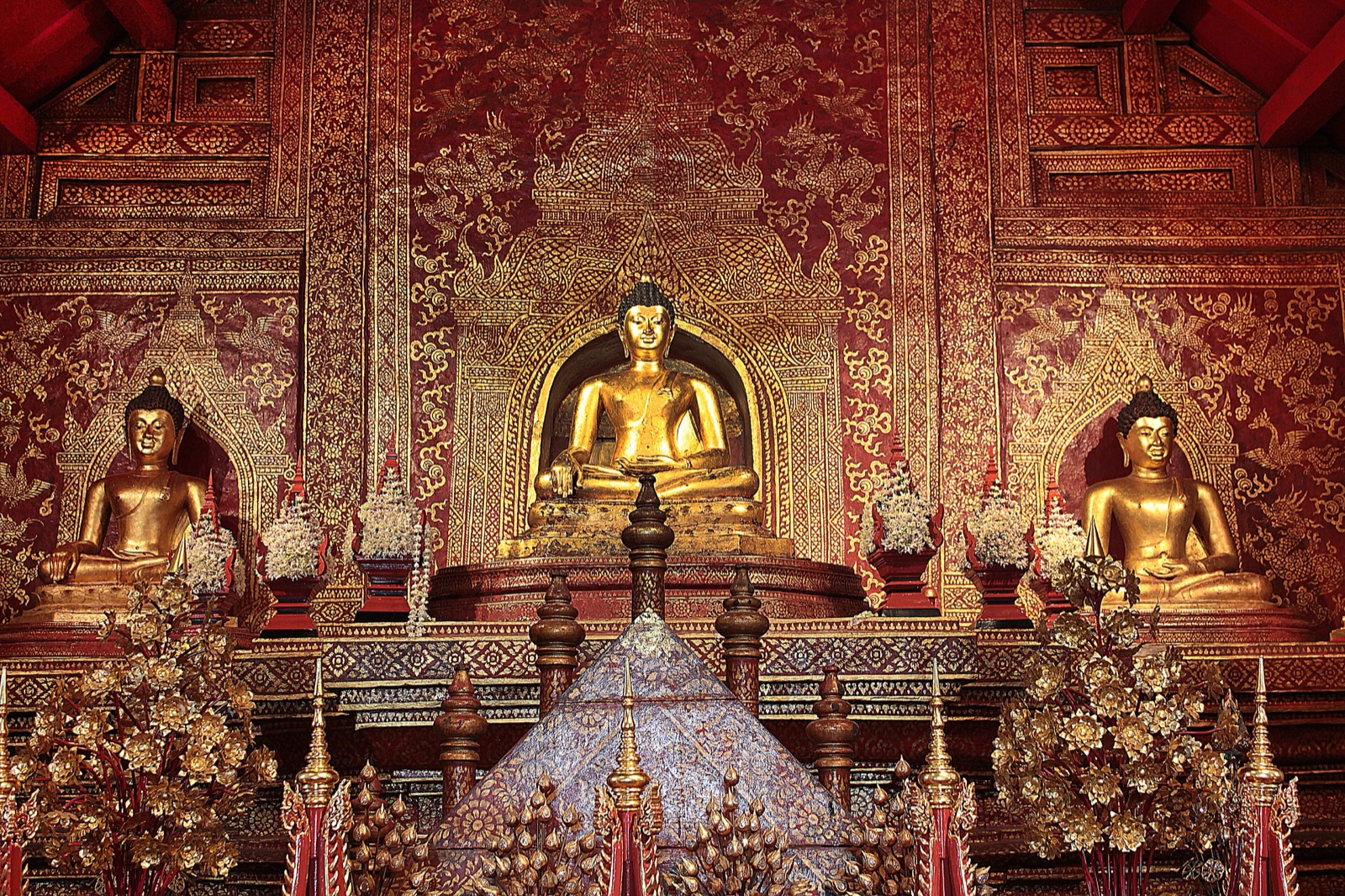
From the same years comes one of the best-loved stories in Chiang Mai. By legend, as told by the monk Bodhiramsi in the Sihinga-nidana and by Ratanapañña in the Jinakalamali, a Buddha image was made in Lanka and travelled via Nakhon Si Thammarat and Sukhothai until it reached Lanna. The Jinakalamali calls it the "Sihala image", that is, the Lankan image (Silpa Wattanatham).
The dictionary records under Phra Sing (phra sing, ระฯพสิง์หฯ) that King Saen Mueang Ma, the 7th king of the Mangrai dynasty, brought it to Wat Li Chiang Phra in 1400 (B.E. 1943), a temple later renamed Wat Phra Singh, and that every Songkran (Lanna New Year) the image is carried round the city on a pavilion so that people can bathe it.
Yet when it comes to the image itself, the dictionary describes it as "Lanna art, Chiang Saen 'Sing Nueng' style". The art historian Sakchai Saisingha explains that seated Buddhas with legs fully crossed like this began in Lanna and spread south, the opposite of the legend's south-to-north journey, and cites Prince Subhadradis Diskul's suggestion that the original image of the legend may have been lost and a new one cast. None of this lessens the image in people's hearts; it simply shows that legend and art history tell the story on different levels.
The second wave: thirty-nine monks cross the sea (1424)
Some fifty years after Sumana, Chiang Mai's monks were eager to study the monastic discipline. In 1424 (B.E. 1967), under King Sam Fang Kaen, 25 Chiang Mai monks led by Mahadhammagambhira, Mahamedhankara and Mahañanamangala, together with 8 monks from Kamboja and 6 Mon monks, 39 in all, went to Lanka to renew their lineage (Phra Phongrawee et al. 2025; Julispong Chularatana). The epigraphist Hans Penth also states that the first chapter of these monks was re-ordained in Lanka in 1424.
As Phra Phongrawee and colleagues summarise, Lankan monks found fault with several of their practices, so the whole group asked to be ordained again, with Dhammacariya as preceptor and the Mahasami Vanaratana as the reciting teacher, in a ceremony held on rafts at the Yapa landing on the Kalyani river. BuddhaNet identifies the ancient city of Kalyani with Kelaniya, near today's Colombo. The group then studied further in the Rohana region in the south of the island.
Kham Mueang keeps the ordination words apart. Buat (buat, บวฯช) means, in the dictionary, "to be ordained as a novice"; full ordination as a monk, the dictionary says, is called pek. So when these 39 were "ordained again", it meant receiving full ordination anew in the Lankan line, even though they were already monks.
Home again: the birth of Hon Pa Daeng (c. 1430)
Then famine struck Lanka, and the group came home, bringing two Lankan elders, Mahauttamapañña and Vikkamabahu, to act as preceptors, and relics as well. On the way they taught at Ayutthaya, Si Satchanalai and Sukhothai, and they reached Chiang Mai in 1430 (B.E. 1973) (Phra Phongrawee et al.). Sirisak and Thanikan cite a chronicle that has them teaching at Ayutthaya in 1429 before coming north, so their arrival in Chiang Mai falls around 1429–1430.
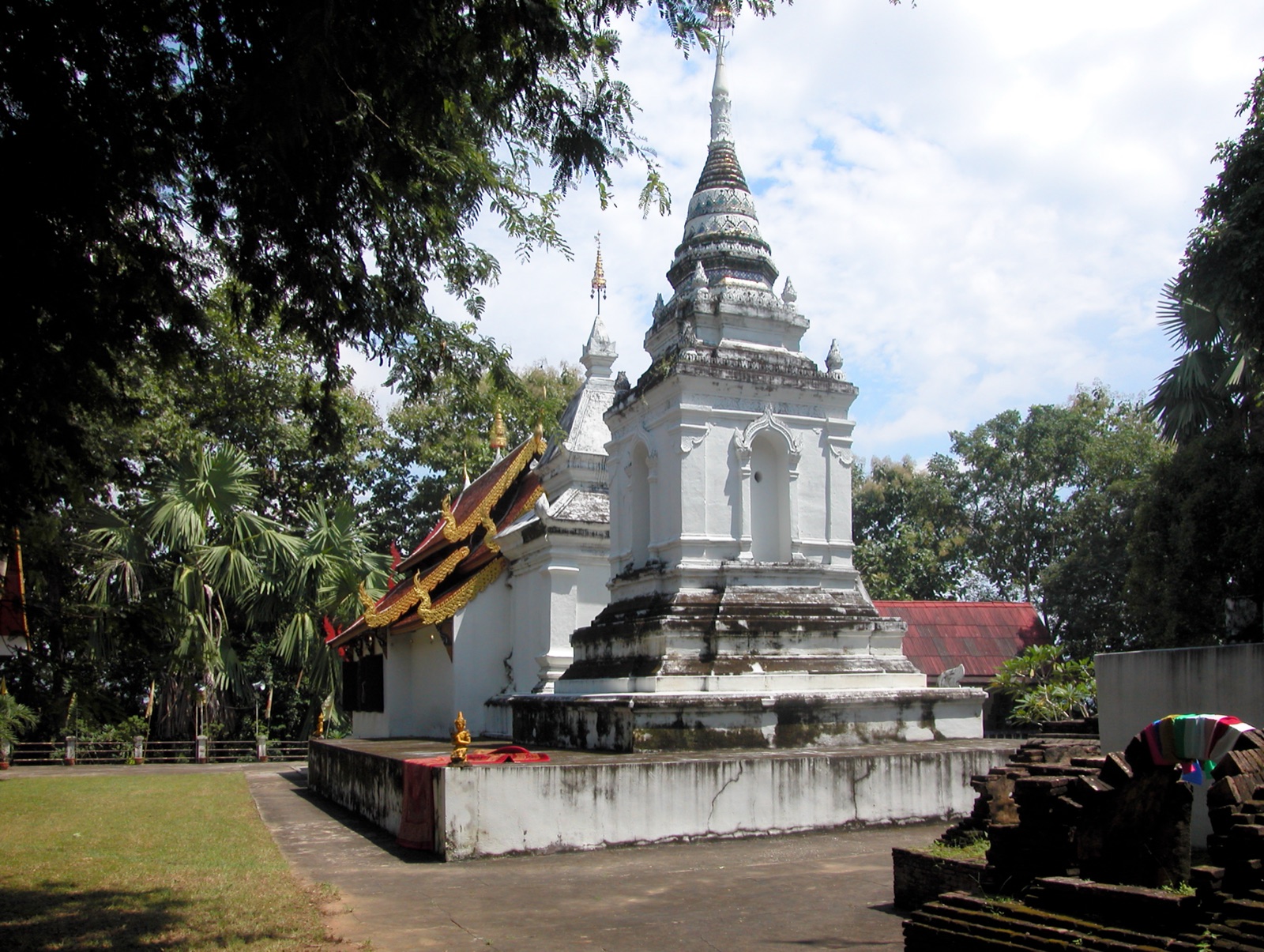
They settled at Wat Pa Daeng (now in Suthep subdistrict, Chiang Mai) and became Hon Pa Daeng, the monks the Jinakalamali calls the Sihala bhikkhu, "Lankan monks". The life of Ratanapañña, author of the Jinakalamali and a monk of this school, is told in Phra Ratanapañña Thera.
Two schools in one city: Suan Dok and Pa Daeng
With two Lankan lines in one city, disagreement followed. Phra Phongrawee and colleagues sum up that Chiang Mai then had three schools of monks: the older local school handed down from Hariphunchai, the Suan Dok school and the Pa Daeng school.
Each side's chronicle records the arguments from its own point of view. Sirisak and Thanikan quote the Mulasasana chronicle of Wat Suan Dok, which says the Pa Daeng monks criticised the Suan Dok monks for accepting money, for how they wore their robes on the alms round and for carrying walking staffs; the two sides also differed over how to pronounce Pali in chanting. The Suan Dok chronicle says King Sam Fang Kaen had the two sides debate before him and ruled for Suan Dok, after which the Pa Daeng monks went out to teach in outer towns such as Lampang, Chiang Saen, Chiang Rai, Phayao, Lamphun and Chiang Tung.
Sees the newcomers as having "brought their teaching from Ayutthaya" and wanting people to stop following Sumana's school (Mulasasana, Wat Suan Dok version, quoted in Sirisak and Thanikan 2017).
Sees its own monks as having "brought the principles of the religion to plant in our land" (quoted in Julispong Chularatana), and held that the older line's ordinations had flaws under the monastic rules (summarised in Phra Phongrawee et al. 2025).
Julispong Chularatana reads the conflict as having four roots: ideas and practice, politics, economy and society, and personal factors. It was not about religion alone.
When King Tilokarat came to the throne he supported the Pa Daeng school, invited Medhankara to live in Lamphun, and was briefly ordained for seven days in the new Lankan school with Medhankara as his preceptor (Sirisak and Thanikan 2017; Phra Phongrawee et al. 2025). One result was that both schools spread as far as Chiang Tung, Chiang Rung, Mueang Yong and Mueang Nai, as told in King Tilokarat.
A bodhi tree from Lanka and the council at Wat Chet Yot (1477)
Around 1456 (B.E. 1999), after hearing a sermon on the merit of planting a bodhi tree, King Tilokarat planted a sapling of the great bodhi tree that had come from Lanka on the edge of Chiang Mai. The temple took its name from it, Wat Maha Photharam, and the king built the Seven Great Places modelled on the Mahabodhi temple at Bodh Gaya in India; its many-spired chedi gave it the popular name Wat Chet Yot, "seven spires" (Phra Phongrawee et al. 2022 and 2025). A bodhi tree from Lanka thus stood in Chiang Mai, one step on from the Anuradhapura tree, itself said to come from Bodh Gaya.
Respect for the bodhi tree lives on in northern custom. At Songkran people bring mai kam sali (mai kam sali, ไม้คําฯระฯสี), forked poles to prop up the bodhi tree, which the dictionary says "is held to extend one's fortune".
In 1477 (B.E. 2020) King Tilokarat had the Tipitaka revised at a council at Wat Maha Photharam, which took a year to finish. Theravada counts it as the 8th council, and the first held in what is now Thailand. Phra Phongrawee and colleagues (2025) suggest the revision let monks of all three schools perform monastic rites together, easing the conflict. The king also had Phra Chao Thong Thip (phra chao thong thip, ระฯพเจั้าทอฯงทิพ์ยฯ) made to mark it, which the dictionary describes as "a copy of the Phra Phuttha Sihing, or Phra Sing Noi", now at Wat Phra Singh.
The result was suep sasana (suep sasana, สืปฯสาสนาฯ) in the dictionary's sense, "to carry on the life of the religion, to make the religion last longer", the same reason Lanna's monks had crossed the sea to Lanka fifty years before.
Palm leaves and letters: Lanka in Lanna's scripture libraries
After the council Lanna's monks wrote a great many works in Pali, in what scholars call the golden age of Lanna Pali literature. Phra Phongrawee and colleagues name, for example, Ñanavilasa's Sankhyapakasaka, Bodhiramsi's Camadevivamsa and Sihinga-nidana, Ratanapañña's Jinakalamali and Sirimangala's Mangalatthadipani.
The Jinakalamali, finished in 1517 (B.E. 2060), tells the history of Buddhism in Lanka, Hariphunchai and Lanna as one continuous story, and cites many Lankan works including the Dipavamsa and Mahavamsa (Phra Phiyaphop and Sirisak 2020). Lanna people came to know the history of Lanka through their own palm leaves. More in The Jinakalamali.
What Lanna took from Lanka was the Pali language and its texts, not its letters. Pali scriptures in Lanna were written in local scripts: tua mueang (tua mueang, ต฿วฯเมิอฯง), the Lanna Dhamma script, which the Unicode encoding proposal describes as used for Tai languages and for Pali, and sometimes Khom (khom, ขอฯม) script; the oldest known Jinakalamali manuscript is in Khom. These palm leaves were kept in the ho tham (ho tham, หํอฯธัม์มฯ), "a scripture library, the building where palm-leaf texts are kept". A short history of the script is in What Is the Lanna Script.
The road back: Lanka asks Siam for monks (1753)
Three hundred years later the road ran the other way. In Sri Lanka the line of full ordination had lapsed. Britannica explains that King Kittisiri Rajasiha of Kandy asked Siam for monks to restore it. Tyler Lehrer (2022), reading Dutch East India Company records alongside Lankan and Siamese chronicles, tells how King Borommakot of Ayutthaya sent a chapter of monks led by Upali, who reached Lanka in 1753 (B.E. 2296) and gave hundreds of ordinations between 1753 and 1756, the beginning of what is called the Siam Nikaya.
This was Ayutthaya's doing, not Lanna's, but it completes the picture: the line of ordination that had flowed from Lanka into the Tai lands for centuries one day flowed back to help Lanka. And in 1955 the Jinakalamali, written in Chiang Mai, was translated into Sinhala and printed in Sri Lanka, according to the list of translations in our article The Jinakalamali.
Common mix-ups: what the sources show
"The Lankan lineage came straight from Lanka"
The first wave, which reached Lanna in 1369, came through the Mon country and Sukhothai. Sumana was ordained at the Udumbara Mahasami's school at Mueang Phan; he did not go to Lanka himself. The second wave, 1424–1430, was when monks from Chiang Mai went to Lanka in person.
"Lanna first received Buddhism from Lanka"
Before the Lankan lineage, this land already had a Buddhism handed down from Hariphunchai, and that older local school lived on beside the two Lankan schools in Chiang Mai (Phra Phongrawee et al. 2025).
"Hon Suan Dok and Hon Pa Daeng were different religions"
Both were Theravada Buddhism of the Lankan lineage, and the dictionary describes both as Lankan-lineage schools. They differed in when and by which road their line came, and in some practices.
"The Phra Sihing in Chiang Mai was made in Lanka"
That is the legend. The dictionary and art historians describe the image at Wat Phra Singh as Lanna art. Both are true in their own way: a legend people hold dear, and a real work of Lanna craftsmanship.
"The Lanna script comes from the Sinhala script"
The sources we read do not say so. What came down the Lankan line was the Pali language and its texts; they were written in tua mueang and Khom, scripts already in use in the region.
Summary
- Lanna and Sri Lanka were tied by Buddhism, not war or trade: what travelled was monks, scriptures, relics and bodhi trees.
- The Lankan lineage reached Lanna in two waves: first through the Mon country and Sukhothai with Sumana (1369, Hon Suan Dok), then with Chiang Mai monks re-ordained in Lanka itself (1424), who founded Hon Pa Daeng around 1430.
- The two schools disagreed, and each chronicle tells it from its own side, until King Tilokarat planted a bodhi tree from Lanka at Wat Chet Yot and held the council of 1477.
- Lanna took the Pali language and the chronicle model from Lanka, but wrote its palm leaves in its own tua mueang.
- Phra Phuttha Sihing came from Lanka by legend, while the image is Lanna art; and in 1753 the line of ordination flowed back from Ayutthaya to help Lanka.
Look up หนป่าแดง, หนสวนดอก and ไม้สะหลี in the Moradok Lanna dictionary, then read more about Lanna's golden age in King Tilokarat.
This article is part of the series Lanna and the World, which places Lanna's story on the same timeline as human history. Start with the overview, Lanna and the World: Human History and Lanna's Place in It; all 700 years of Lanna are told in Lanna.
📚 Read more: King Kue Na · King Tilokarat · Phra Ratanapañña Thera · The Jinakalamali · Revered Monks of Lanna
Sources
- Moradok Lanna dictionary: หนป่าแดง · หนสวนดอก · ไม้สะหลี · พระสิงห์ · พระเจ้าทองทิพย์ · เถรวาท · ผ้าลังกา
- พระพงษ์ระวี อุตฺตรภทฺโท และคณะ. (2025). ผังวัดหลวงในล้านนาที่รับอิทธิพลจากพุทธศาสนาลังกาวงศ์ [Lanna Royal Monastery Layouts under Sri Lankan Theravada]. Journal of Buddhist Arts 8(1)
- จุฬิศพงศ์ จุฬารัตน์. (2025, reprinted from May 1999). ศึกพระสงฆ์ในสยาม สังฆเภทคณะสงฆ์ลังกา ป่าแดง vs ป่ามะม่วง-สวนดอก [The schism of the Lankan-lineage sangha in Siam]. Silpa Wattanatham
- ศิริศักดิ์ อภิศักดิ์มนตรี และธณิกานต์ วรธรรมานนท์. (2017). วิเคราะห์ตำนานมูลศาสนา ฉบับวัดสวนดอก [An analysis of the Mulasasana chronicle, Wat Suan Dok version]. Journal of Fine Arts, Chiang Mai University 8(1)
- พระพีร์ญาภพพ์ ธารพนาลี และศิริศักดิ์ อภิศักดิ์มนตรี. (2020). วงศ์พระพุทธเจ้าในชินกาลมาลีปกรณ์ [The lineage of the Buddhas in the Jinakalamali]. Journal of Fine Arts, Chiang Mai University 11(1)
- พระพงษ์ระวี อุตฺตรภทฺโท, พระครูสมุห์ธนโชติ จิรธมฺโม และ ประทีป พืชทองหลาง. (2022). เจดีย์หลวงมหาธาตุกลางเวียง [Chedi Luang and the ideal of the universal monarch under King Tilokarat]. Panidhana Journal 18(1)
- Silpa Wattanatham. (2026). ตามรอย "พระพุทธสิหิงค์" พระพุทธรูปสำคัญของไทยทั้ง ๓ องค์ [The three Phra Phuttha Sihing images and their three art styles] (citing Sakchai Saisingha, 2004)
- Penth, Hans. (1995). Which Ratanapañña Composed the Jinakālamālī?. Journal of the Siam Society 83
- Lehrer, Tyler A. (2022). Dangerous Friendships in Eighteenth-Century Buddhist Laṅkā and Siam. Itinerario, Cambridge University Press
- Witzel, Michael. (2009). Moving Targets? Texts, language, archaeology and history in the Late Vedic and early Buddhist periods. Indo-Iranian Journal 52 (Harvard DASH)
- Encyclopaedia Britannica: Mahendra · Pali canon · Mahavamsa · Polonnaruwa · Kittisiri Rajasiha
- UNESCO World Heritage: Sacred City of Anuradhapura · Ancient City of Polonnaruwa
- BuddhaNet. Kelaniya. Sacred Island: A Buddhist Pilgrim's Guide to Sri Lanka
- Everson, M., Hosken, M., & Constable, P. (2007). Revised proposal for encoding the Lanna script in the BMP of the UCS. Unicode
- Moradok Lanna articles behind the Lanna events (each with its own sources): King Kue Na · King Tilokarat · Phra Ratanapañña Thera · The Jinakalamali · Lanna and the World
Practise the words from this article
Flip through 17 flashcards of the Lanna words used in this article.
Look up "หนป่าแดง" in the Moradok Lanna dictionary (in Thai)


